


Custom T Shirts Best Quality: A Practical Buyer's Guide

“Premium” doesn't mean best quality. A heavy blank can have weak seams, a loose collar, and a print that cracks after careless pressing. A lightweight shirt can outperform it when the fabric, construction, decoration, and care instructions match the job.
That's the standard buyers should use for custom T-shirts best quality. Judge the complete system, not the label on the neck or the weight listed in a catalog. The global apparel and textile sector was valued at approximately $1.84 trillion in 2023 and is projected to reach $2.45 trillion by 2030, while custom T-shirt printing was estimated at $1.8 billion in 2023. Customized apparel has become a serious product category, so quality needs to mean more than an attractive mockup. (Rawshot's decorated apparel industry data)
Table of Contents
What Best Quality Really Means for a Custom Tee - Premium is not a specification
Picking the Right Fabric for the Job - Match the fiber to the wearer - Use weight as a tool, not a ranking
Construction Details That Separate a Good Blank From a Disposable One - Read the garment like a production spec - The 60-second blank-shirt check
Why DTF Is Often the Best Print Choice for Small Runs - Pick the method for the order, not the trend
A Simple Wash-Test Protocol Before You Approve a Run - Set a laundering benchmark - Run the test on the complete system - Turn observations into an acceptance standard
Smart Ordering Practices for Small Batches - Build one order specification - Ask questions that expose weak processes
Care Labels and End-User Instructions as Part of Quality - Give every wearer usable instructions
What Best Quality Really Means for a Custom Tee
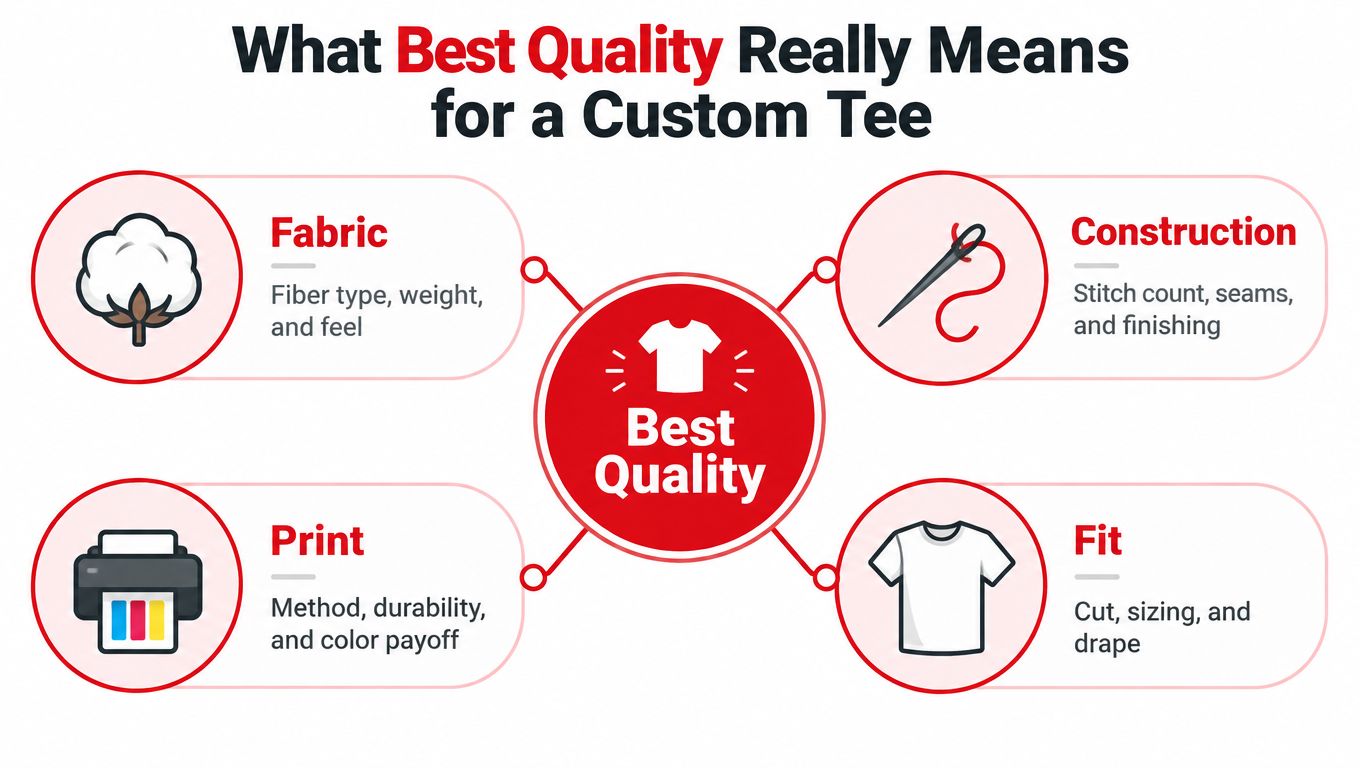
The best custom tee balances four separate factors: fabric, construction, print, and fit. A shirt fails when one of those factors gets ignored. A smooth, expensive blank won't rescue a transfer applied with poor pressure. A vivid DTF design won't make a collar recover its shape. A well-sewn shirt won't feel right if the cut is wrong for the people wearing it.
Premium is not a specification
Treat “premium” as a sales adjective until the supplier gives you measurable details. Ask for the fiber composition, fabric weight, cut, seam construction, decoration method, press conditions, care guidance, and a sample made on the actual garment. If the answer is only a brand name or a claim about softness, you still don't know what you're buying.
This matters especially for small teams, ranch crews, event organizers, and creators. A giveaway shirt might prioritize breathable fabric and accessible sizing. A ranch work shirt needs dependable construction, a practical fit, and decoration that tolerates repeated wear. A creator selling garments needs consistent appearance across batches, not one impressive sample.
Production rule: A quality claim is useful only when you can inspect or test the part of the product it describes.
A useful starting point is to document the order in four lines:
Fabric: fiber content, weight, surface, stretch, and expected shrinkage.
Construction: seams, collar, shoulder reinforcement, hems, and shape retention.
Print: artwork detail, color coverage, application method, adhesion, and wash performance.
Fit and care: measurements, intended use, size grading, labeling, and washing instructions.
You can use a visual brand reference such as this apparel branding example, but don't confuse presentation with production evidence. The strongest order specification names the exact garment, decoration process, placement, and acceptance test before the batch is approved.
Picking the Right Fabric for the Job
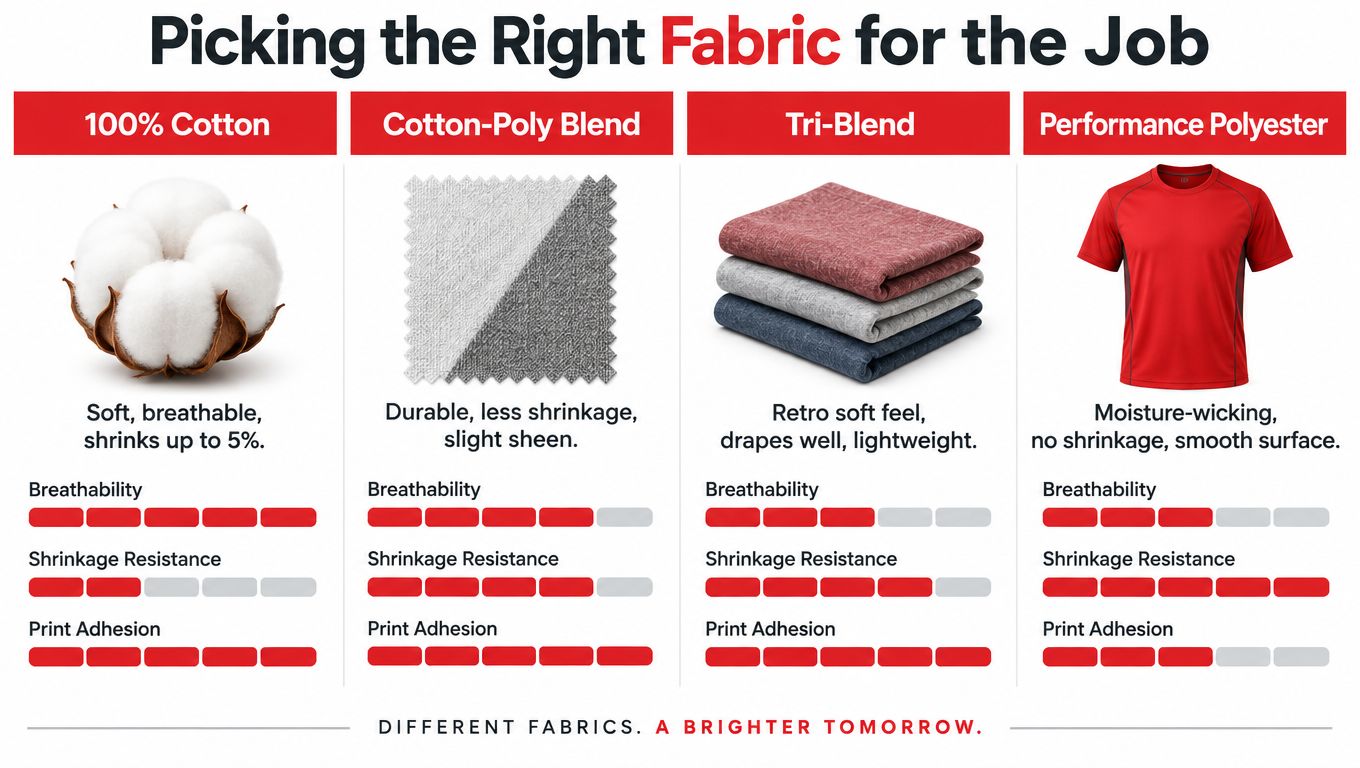
Fabric selection should begin with the wearer and the environment, not with the heaviest option on the product page. Fiber affects breathability, moisture handling, shrinkage, surface feel, and how decoration behaves under heat and laundering. Weight matters, but it's only one variable.
Match the fiber to the wearer
100% cotton is a dependable choice for casual tees, event apparel, and many screen-printed applications. It usually offers a familiar hand feel and good breathability, but it can shrink and may hold moisture longer than a performance fabric. Ring-spun and combed cotton generally provide a smoother, softer surface than rougher open-end constructions, which can improve the finished feel.
Cotton-poly blends make sense when shape retention and easier care matter. Polyester can reduce shrinkage and improve resilience, while cotton keeps the garment from feeling purely synthetic. The tradeoff may be a slight sheen or a different print response, particularly on darker polyester garments where dye migration needs attention.
Tri-blends are lightweight and drapey, with a soft, broken-in character. They suit lifestyle merchandise, creator collections, and casual event apparel better than hard-wearing work uniforms. Their lighter construction can feel excellent in warm weather, but it won't deliver the same substantial presence as a heavier tee.
Performance polyester belongs in hot, active, or moisture-heavy settings. It typically offers a smooth surface and strong shape retention, but the decoration process must account for heat sensitivity and dye migration. Don't select it just because the fabric resists shrinkage. Confirm that the chosen print system has been tested on that specific garment.
Use weight as a tool, not a ranking
A lightweight shirt can be the right answer for a summer event team, layered workwear, or a warm-climate crew. A heavier fabric may suit an outdoor lifestyle line or a garment intended to feel substantial. The question is whether the blank supports the intended use, not whether it wins a weight contest.
For a concrete example, the RXB Marlboro Rodeo Hoodie uses an 8.5 oz./yd² 70/30 ring-spun cotton/polyester blend with a 100% cotton face, fleece lining, split-stitch double-needle sewing, twill neck tape, and ribbed cuffs and waistband. Those specifications describe a particular heavy hoodie construction, but they don't make it the correct choice for every custom T-shirt project.
Intended use | Practical fabric direction |
|---|---|
Summer event staff | Breathable cotton or a lighter blend |
Ranch and outdoor crews | A durable blend or performance fabric, depending on heat and activity |
Corporate giveaway | Comfortable cotton or cotton-poly blend with broad size appeal |
Creator merchandise | Tri-blend, cotton, or fashion-oriented blend selected for the desired drape |
Active team apparel | Performance polyester, provided the print process is validated |
Before ordering, request a physical sample. Touch the face, inspect the inside, stretch the collar, and check how the intended decoration sits on the surface. A catalog description can't tell you whether the shirt feels right on the people who will wear it.
Construction Details That Separate a Good Blank From a Disposable One
A blank shirt should survive handling before it ever reaches the heat press. Turn it inside out. Look at the seam lines, collar attachment, shoulder area, and hems. You're checking whether the garment was built with consistent tension and reinforcement, not whether the product page uses the word “premium.”
Read the garment like a production spec
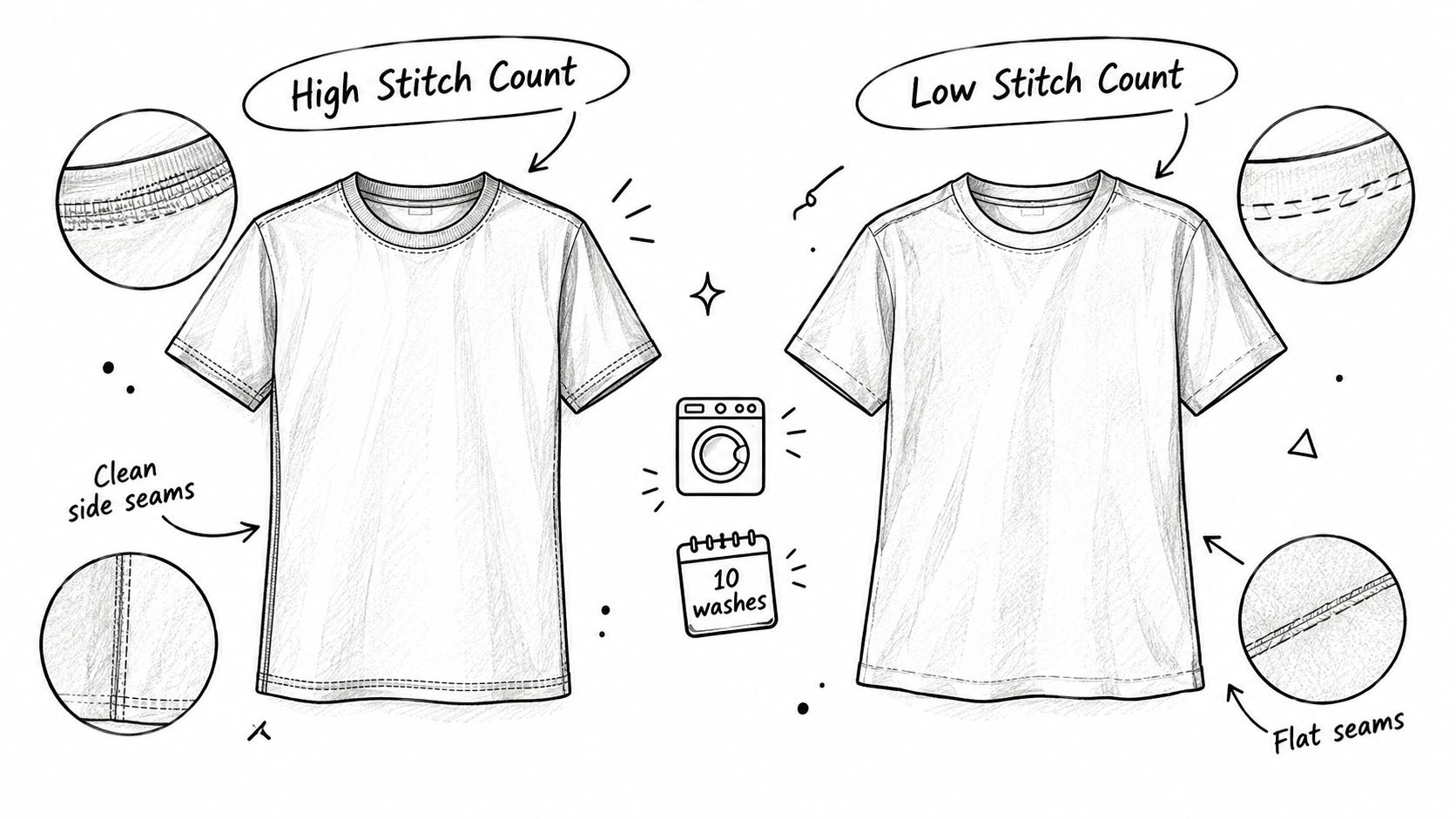
Side seams usually give a shirt more predictable shape and can make alignment easier during decoration. Tubular construction can reduce seam bulk and may suit simple, relaxed garments, but the body can twist or fit differently depending on the blank. Neither choice is automatically superior. The correct choice depends on the intended cut and how consistently the shirt presents on the press.
A taped neck and shoulder seam help stabilize high-stress areas. The collar should lie flat, feel securely attached, and recover after you stretch it gently. If the rib curls, waves, or stays stretched after a light pull, expect the neckline to look tired sooner.
Inspect the hems for even stitching and clean finishing. Missing stitches, skipped tension, loose threads, and irregular seam allowances are warning signs. A double-needle hem can provide a more finished appearance, but execution matters more than the label. A badly sewn reinforced hem is still badly sewn.
The 60-second blank-shirt check
Use the same quick inspection on every candidate garment:
Stretch the collar lightly. It should return without obvious rippling.
Check both shoulder seams. They should sit evenly and show consistent reinforcement.
Inspect the side seams. Look for twisting, puckering, and uneven alignment.
Pull the hem gently. Secure stitching should remain stable without opening.
Measure the sample. Record body length and width before washing.
Turn it right side out. Check whether the fabric surface is even enough for the design.
Try the intended print area. A rough, highly textured surface can soften fine artwork.
A garment durability study evaluated 47 T-shirts washed and tumble-dried 50 times, examining pilling, surface disruption, fading, color change, and component damage. The research also found that price alone can't predict durability and that fiber composition affects physical performance. (University of Leeds garment durability study)
That's why a high price or heavy fabric shouldn't end the inspection. Construction, fiber, laundering behavior, and decoration need separate checks.
Why DTF Is Often the Best Print Choice for Small Runs
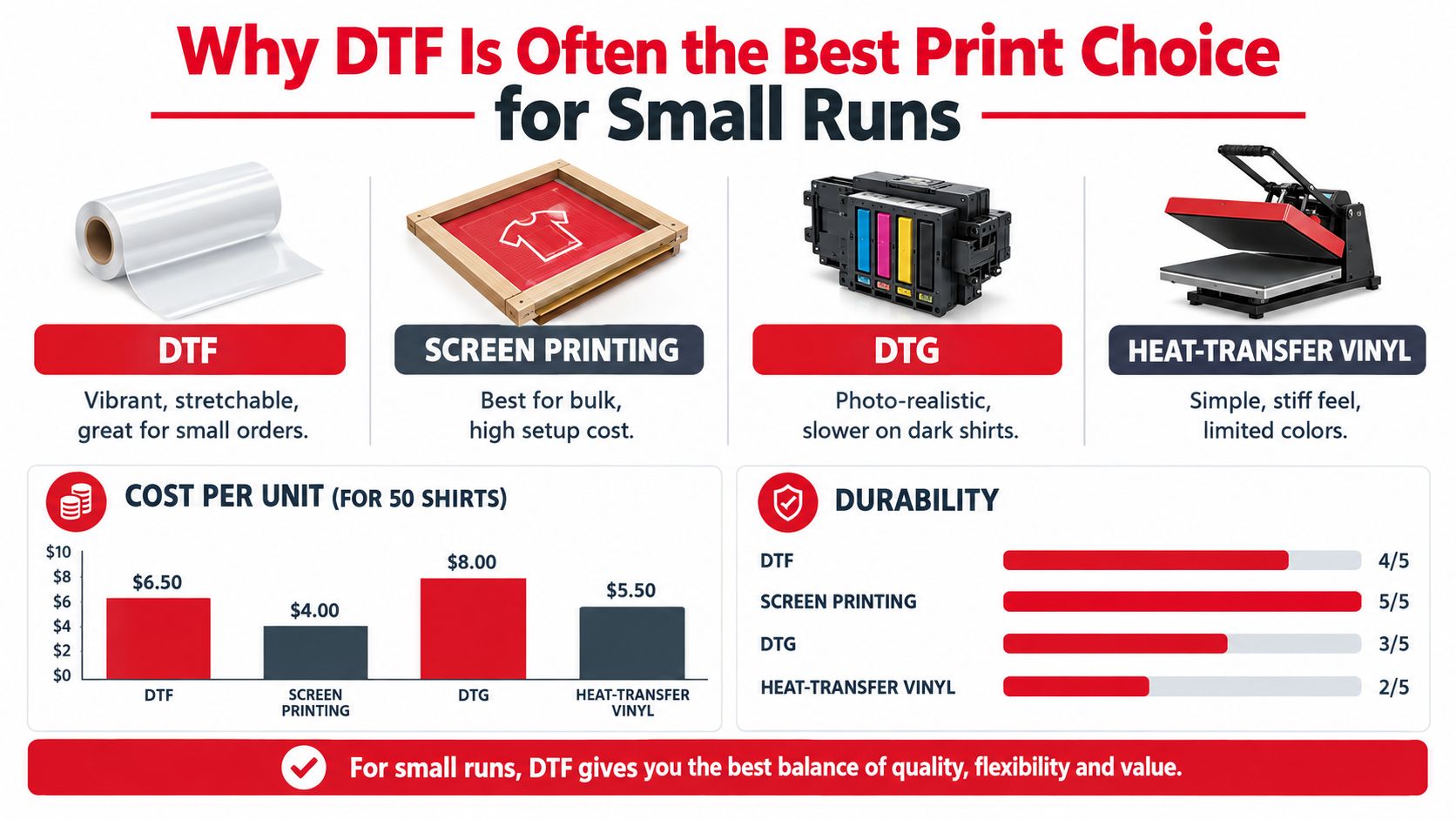
For short runs, Direct-to-Film printing, or DTF, is usually the most practical choice when the design includes multiple colors, fine details, gradients, or a white underbase on dark garments. It supports detailed artwork without the screen setup associated with traditional screen printing, and the transfer can be applied across suitable cotton, blends, and polyester garments when the settings are controlled.
Pick the method for the order, not the trend
Screen printing remains a strong option for larger, repeatable orders with relatively simple artwork. Once screens are prepared, production can become efficient, and the hand feel can be excellent when the ink and curing process suit the garment. For a few pieces or highly detailed artwork, setup demands may make it less convenient.
DTG, or direct-to-garment printing, can reproduce photo-like artwork directly on fabric. It may be attractive for cotton garments and detailed designs, but dark shirts often need more preparation, and the production workflow may be slower for a small mixed order.
Heat-transfer vinyl works well for basic names, numbers, and simple shapes. It has a more limited color range and can feel stiffer, especially when the design covers a large area. It isn't the first choice for a soft, complex full-color graphic.
DTF offers strong color payoff, fine detail, and flexibility across many small-order applications. The result still depends on the garment, powder, curing, pressure, temperature, dwell time, and operator consistency. A method label doesn't replace process control.
Buyer's rule: Ask how the transfer was tested on your exact garment, not whether DTF is “durable” in general.
Independent technical research reported that DTF-printed cotton and polyester samples retained QR-code scannability after five wash cycles and achieved approximately Grade 4 to 5 colorfastness under the study conditions. That result is useful evidence, not a universal promise. Fabric stretch, texture, dye system, heat sensitivity, and press settings can change the result. (Independent DTF textile research)
A supplier should show you how it manages artwork intake, application, and quality checks. This DTF production reference can help buyers understand the kind of workflow questions to ask before approving a batch.
A Simple Wash-Test Protocol Before You Approve a Run
“Long-lasting” isn't a test result. Before approving a decorated batch, create one representative sample using the exact garment, artwork, print size, placement, and press settings planned for production. Keep one identical shirt unwashed as your control.
Set a laundering benchmark
AATCC TM61 provides an accelerated colorfastness method for textiles expected to withstand frequent laundering. The 2A option approximates five home machine launderings at approximately 38 ± 3 °C, while the more vigorous 3A option approximates five home machine launderings at approximately 60 ± 3 °C. (AATCC TM61 testing method)
Choose the condition that reflects the customer's environment. A casual event tee may need a different benchmark from ranch workwear that faces hotter washing and heavier use. Record the choice instead of leaving “wash tested” as an unexplained claim.
Run the test on the complete system
Document these details before washing:
Garment identity: composition, fabric weight, color, size, and construction.
Decoration record: artwork version, transfer dimensions, location, white-underbase coverage, and print orientation.
Press settings: temperature, pressure, dwell time, and any post-press step.
Wash protocol: water condition, detergent, cycle, drying method, and number of cycles.
Control sample: an unwashed specimen stored under the same conditions.
After washing, compare the decorated sample with the control under consistent lighting. Look for edge cracking, lifting, color shift, distortion, incomplete white coverage, surface abrasion, and changes in garment dimensions. Stretch the printed area gently. The design should move with the fabric rather than separating at the edges.
Turn observations into an acceptance standard
Use a simple record with columns for before wash, after wash, observed change, and accept or reject. Photograph the front and back, measure the body again, and note any collar or hem distortion. If the shirt fails, change one variable at a time. Don't blame the transfer before checking the blank, pressure, curing, or drying conditions.
This protocol separates garment durability from print durability. It also gives a printer a clear production target. The final specification should state exactly what was tested and what visible changes are unacceptable for the intended use.
Smart Ordering Practices for Small Batches
Small orders often fail through poor coordination rather than bad equipment. A customer approves a mockup without confirming the actual blank, sends low-quality artwork, overlooks placement, then discovers that “rush” describes production time but not shipping. Quality begins before the press.
Build one order specification
Put the following information in writing:
Garment: exact style, color, size range, fiber content, weight, and fit.
Artwork: final file, transparent background where required, color expectations, and approved proof.
Placement: location, print dimensions, orientation, and distance from seams or collars.
Production: decoration method, application settings, sample approval, and quality checks.
Care: washing, drying, ironing, and bleaching guidance.
Fulfillment: packing method, delivery address, required date, and response process for defects.
Ask the shop whether it keeps production notes tied to the order. You want accountability for garment substitutions, artwork revisions, placement changes, and reprints. A visual on-demand apparel workflow reference illustrates the kind of process visibility buyers should expect.
Ask questions that expose weak processes
Which exact garment will you use, and can I approve a sample?
How do you verify print placement and size across the batch?
What happens if the garment is unavailable after approval?
How do you check adhesion, fine lettering, and white-underbase coverage?
What does your stated turnaround include?
Who handles a defective garment or incorrect print?
Will the final shipment include care instructions?
Don't judge a supplier only by the lowest quote. A slightly cheaper blank can cost more when sizing is inconsistent, artwork needs rework, or a failed batch arrives after the event. The practical objective is a repeatable order, not a low number detached from the production conditions.
Care Labels and End-User Instructions as Part of Quality
A shirt that looks excellent at delivery can still become a poor product if nobody tells the wearer how to maintain it. Heat, abrasion, harsh detergent, and unsuitable drying can damage fabric and decoration. When an organizer distributes shirts individually, the recipients may never see the original product page, so care information must travel with the garment.
The FTC Care Labeling Rule requires appropriate cleaning instructions for covered garments. U.S. textile and wool products generally need fiber content, country of origin, and responsible business identity disclosures, while care instructions can include washing or dry-cleaning guidance, water temperature, drying, bleaching, ironing, and warnings against damaging procedures. (FTC clothing and textile guidance)
Give every wearer usable instructions
A practical care card or hangtag should cover:
Washing: turn the garment inside out and use the recommended water temperature.
Drying: identify the preferred drying method and caution against excessive heat where appropriate.
Decoration: explain that aggressive abrasion, high heat, and unsuitable chemicals can affect the print.
Ironing: keep direct heat away from the decorated area unless the production specification permits it.
Garment details: preserve the fiber content, origin, and responsible business information required for the product.
Distribution: include the instructions in packing slips, individual packages, team handouts, or a digital care card.
Don't frame preventable print damage as user failure when the buyer never received clear guidance. Care is part of the handoff between producer and wearer. For ranches, teams, companies, and event organizers, that handoff protects the appearance of the entire order and reduces avoidable complaints.
Wear X Apparel, LLC supports custom garment selection and DTF production for single pieces and batch orders, including apparel for teams, events, organizations, and made-to-order projects. Visit Wear X Apparel, LLC with your garment requirements, artwork, intended use, and wash-test expectations so the production plan can be built around measurable quality rather than a vague “premium” label.
Comments