


Hoodies with Pockets: A Custom Apparel Guide

You've approved the artwork, chosen a comfortable blank, and ordered hoodies with pockets for your team or event. Then the samples arrive. The chest graphic sits too low, the DTF transfer crosses a bulky pouch seam, and the pocket opening stretches when someone puts a phone inside. The garment may look fine in a digital mockup, but the physical hoodie reveals a production problem.
Pocket design affects comfort, carrying capacity, warmth, garment drape, and print placement. For custom apparel, the pocket isn't a decorative extra. It's part of the garment's architecture, and choosing the wrong architecture can compromise both utility and branding.
Table of Contents
Breaking Down the Five Main Hoodie Pocket Styles - Kangaroo pouch - Split zip pockets - Welt pockets - Side-seam pockets - Hidden and utility compartments
Evaluating Pocket Utility and Thermal Performance - What to inspect before ordering - Warmth versus access
Navigating Print Placement and DTF Constraints - Start with the blank, not the mockup - Printing on the pouch - Better layout alternatives
Matching Fabric Weight and Fit to the End User - Match the garment to the buyer - Fabric and decoration must agree
Selecting Premium Blanks for Custom Production - Ask for evidence before approving a run
Your Hoodie Pocket Selection Checklist - Confirm the pocket's job - Test the physical opening - Inspect the load-bearing details - Map the decoration zones - Wash before approving production - Match the blank to the audience
Why Pocket Architecture Matters for Custom Apparel
A sample hoodie can pass a digital review and fail on the production table. A full-width kangaroo pouch changes the front panel, adds weight across the lower torso, and reduces the uninterrupted area available for a large DTF graphic. Review the pocket before approving the blank, especially for branded hoodies used by teams, crews, or event staff.
A phone, wallet, or keys can pull the pouch downward when the fabric, seam, or attachment points lack sufficient support. The result may be a sagging front, distorted artwork, or an opening that no longer lies flat. The construction guidance in this pocket construction overview describes the kangaroo pocket as a patch pocket with side openings, attached after the main body panels are assembled. That construction makes the pouch both a storage compartment and part of the garment's front structure.
Production rule: Treat the pocket as part of the print layout before approving the blank, not as an accessory to evaluate afterward.
The design's history reinforces its practical purpose. Earlier patch pockets appeared in the 19th century, while the modern kangaroo pocket emerged in the 1930s as a hand-warmer feature on sweatshirts, according to Gear Patrol's history of the patch pocket. The hoodie's connection with practical workwear developed during the same decade, combining warmth, storage, and quick access in one front pouch.
That combination still suits ranch crews, event staff, commuters, and outdoor customers. A pouch may keep hands warm effectively, yet provide less security for a travel hoodie carrying loose essentials. A large front print can also fit well above side-seam pockets while becoming cramped or exposed near a high pouch on a pullover.
Before production, confirm three construction details:
Where the pocket begins: A high pocket shortens the usable chest-to-abdomen print area.
How it carries weight: Reinforcement and fabric recovery determine whether the pouch stays flat.
Which seams the artwork crosses: DTF transfers placed over thick joins or pocket edges face added stress during wear and washing.
Start with the end user's job. Decide whether the hoodie needs hand warming, everyday carry, secure movement, or maximum branding space. Then choose a pocket and blank whose construction supports that use.
Breaking Down the Five Main Hoodie Pocket Styles
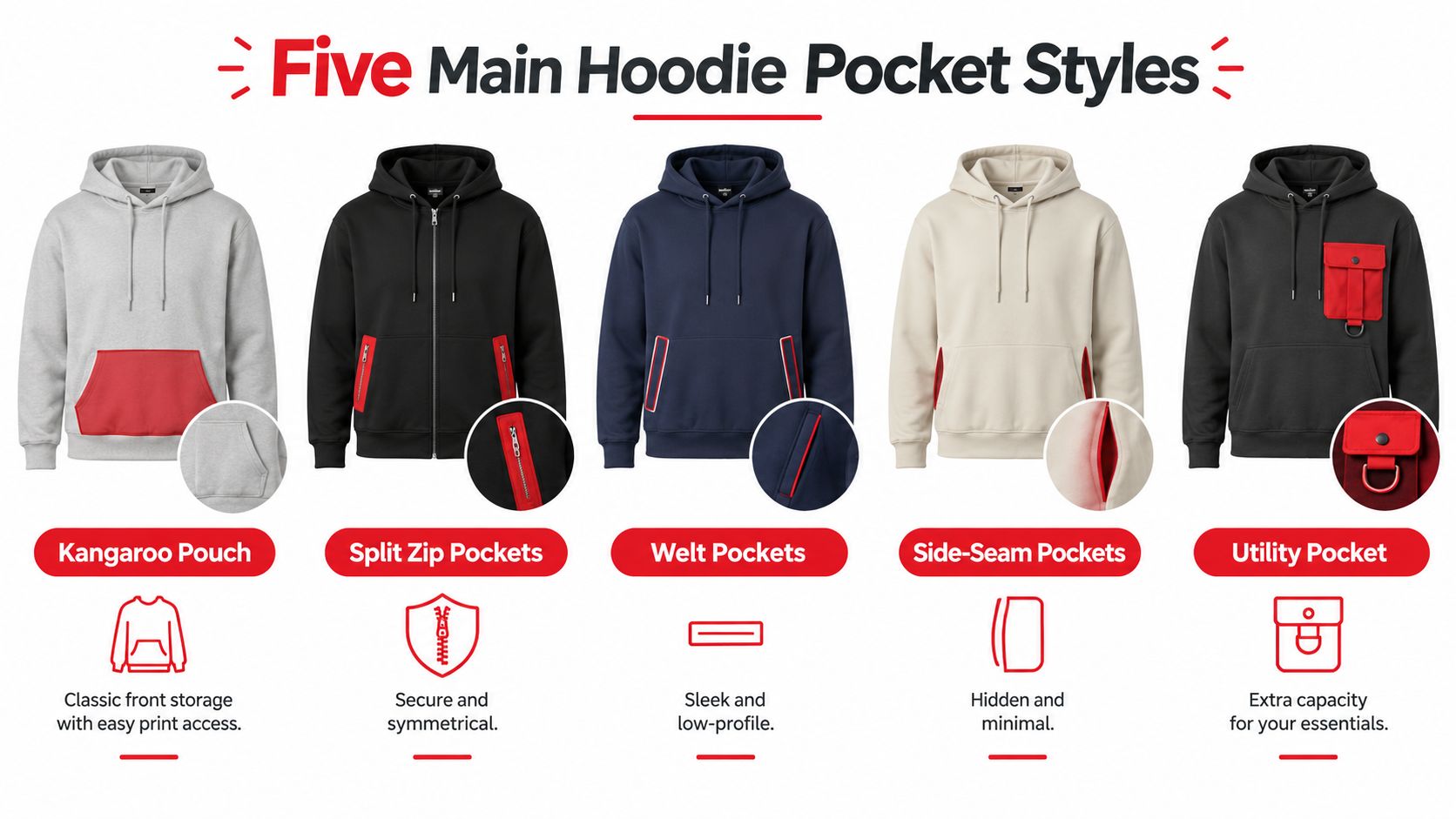
Pocket construction affects three production decisions at once: how the hoodie hangs, how the wearer uses it, and where a DTF transfer can sit without crossing bulky edges or openings. Two garments may look similar in a catalog thumbnail while offering very different usable print areas.
Kangaroo pouch
A kangaroo pocket is a wide patch pocket attached to the lower front of a pullover, with openings on both sides for the wearer's hands. It provides familiar hand warmth and leaves a broad chest area above the pouch for a centered logo.
The full-width construction affects load distribution. Phones or other items can pull across the front panel and change its drape. A DTF transfer placed too low may approach the pocket's upper edge, where the raised transition can affect adhesion, registration, and the finished appearance.
Split zip pockets
Zip-up hoodies often use two separate pockets divided by the center zipper. Each pocket can sit on its own front panel, giving the garment a balanced appearance and keeping stored items apart.
This arrangement suits travel, staff apparel, and active use because the zippers help retain contents. The trade-off is extra hardware and seam detail. Keep artwork clear of the zipper tape and pocket openings. A large centered front transfer usually needs a different placement, such as the upper chest or back.
Welt pockets
A welt pocket has a narrow, finished opening close to the garment surface. Its low-profile appearance fits minimalist corporate apparel and premium streetwear where a pouch would add too much visual weight.
The opening offers less hand-warming space and limited storage access. Because the finish depends on accurate stitching and clean pressing, inspect the welt for puckering before applying a transfer. DTF artwork should also remain clear of the opening and its reinforcement.
Side-seam pockets
Side-seam pockets sit within the garment's side seams and can remain nearly invisible from the front. They preserve a wide, uninterrupted panel, making them a practical choice when a large DTF print is the main branding requirement.
They work better for small items than for warming both hands together. Access may also feel less natural when the wearer is seated or working with both arms extended. The pocket position can influence side-to-side balance, so check the sample on a person before finalizing artwork placement.
Hidden and utility compartments
Interior pockets, concealed zip compartments, and utility pockets address more specific use cases. A hidden compartment can support travel or movement-heavy work, while a larger utility pocket may suit workwear applications.
Extra layers and attachments add bulk. That bulk can change the front drape, narrow the practical decoration area, or show through a lightweight face fabric. The RXB Marlboro Rodeo Hoodie is one catalog example of a heavy-weight hoodie with a generous fit, fleece-lined hood, and split-stitch double-needle sewing on all seams. Assess those construction features alongside the pocket design before approving a blank.
Evaluating Pocket Utility and Thermal Performance
A pocket earns its place when the wearer can reach it, use it without fighting the opening, and remove items without distorting the garment. The label “kangaroo pocket” says little about phone retention, hand warmth, or stability after washing. For custom apparel, those practical limits also define how much uninterrupted fabric remains for branding.
Fabric density is the first variable to inspect. A firm face fabric can resist distortion around the opening, while a soft knit with limited recovery may stretch after repeated use. Pocket depth must match the intended load. A shallow pouch may warm the hands well but offer poor everyday storage.
What to inspect before ordering
Use a physical sample whenever possible. Test it with the items the end user is likely to carry, then assess the pocket while the hoodie is worn, not only when it is laid flat.
Opening force: Insert a hand naturally. Excessive resistance discourages use, while a loose opening can release contents during movement.
Depth and retention: Check whether a phone or wallet stays inside when the wearer bends, walks, or sits.
Stress reinforcement: Inspect bar tacks, topstitching, and the points where the opening joins the pocket edge.
Post-wash stability: Wash and dry the sample according to its care instructions. Look for puckering, twisting, or a stretched opening.
Front-panel drape: Load the pocket and watch whether the hem lifts or the torso pulls forward.
As noted earlier, stronger edge finishing and reinforcement matter when a pocket carries heavier items or faces frequent use. That principle applies directly to branded workwear. A clean DTF transfer cannot compensate for a pocket that loses its shape during the first week.
Warmth versus access
A full-width kangaroo pouch adds an insulating fabric layer over the stomach and creates a broad hand-warming area. PUMA's Cloudspun hoodie product guidance notes the insulating benefit of a full-width pouch and explains that zip-up designs can reduce some of that advantage because zippers and hardware create additional paths for heat loss.
The right choice depends on the use case. Cold-weather workwear and outdoor events may benefit from a deep, wide pouch that supports hand warmth and core coverage. Travel use may favor a concealed zip compartment, where retention and secure access matter more than maximum insulating area.
Pocket structure also affects branding decisions. A pouch with a large central panel may leave limited stable fabric above its opening, while a side or concealed design can preserve a cleaner print area. Confirm those boundaries on the physical blank before approving artwork, especially when the pocket and print need to serve the same front panel.
Navigating Print Placement and DTF Constraints
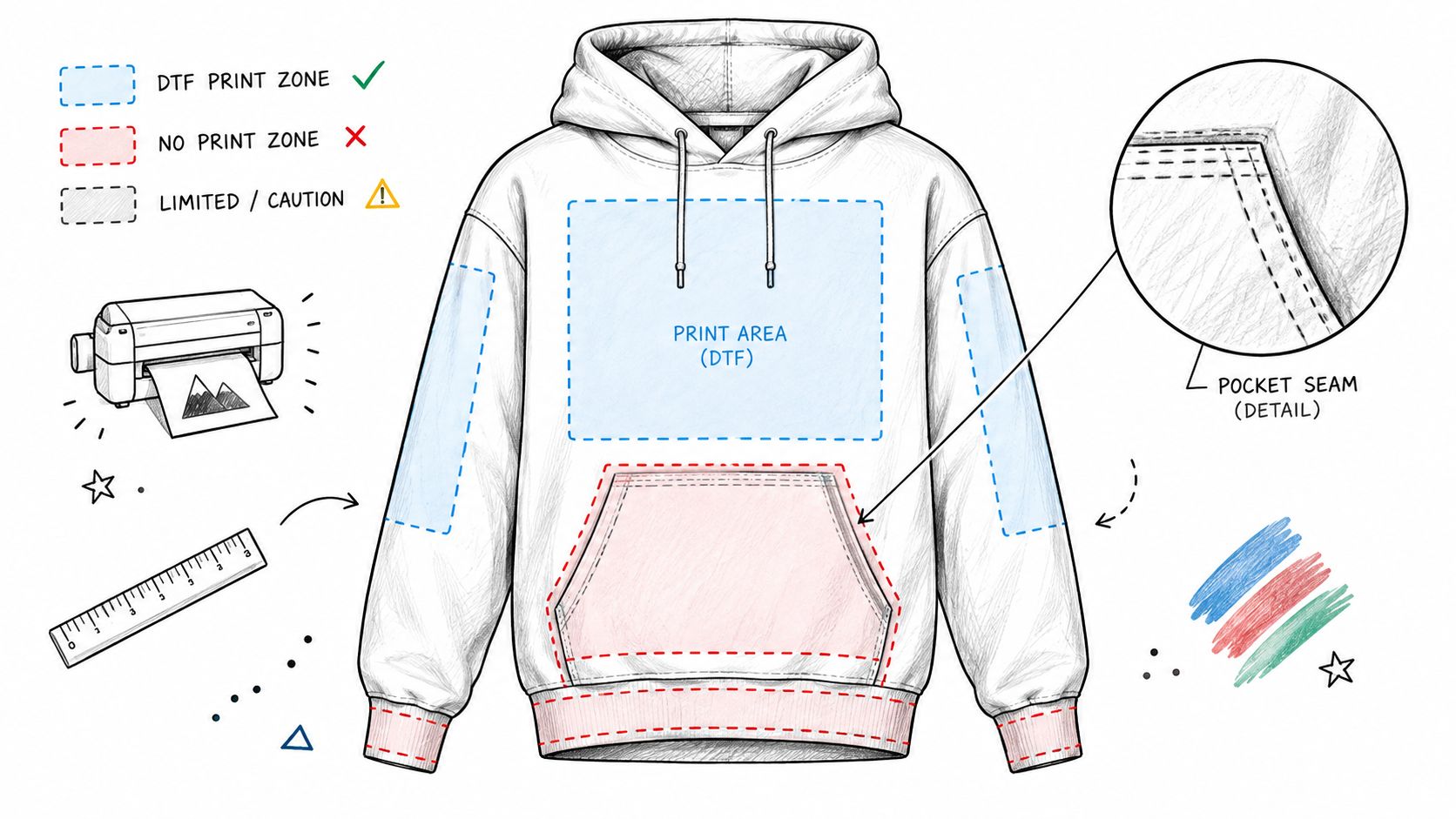
DTF printing works best on a stable, relatively flat section of fabric. A pocket introduces layers, edges, openings, and seam transitions, so the artwork needs to be planned around those features rather than placed by visual guesswork.
Start with the blank, not the mockup
The first step is to photograph or measure the actual garment front. A digital template can misrepresent the pocket's height, opening angle, seam allowance, and stretch. Mark the pocket perimeter, center line, zipper, drawcord exits, and any bulky reinforcement before positioning the artwork.
Keep the primary chest design on a single, stable panel whenever possible. Avoid placing critical lettering across the pocket opening or directly over a seam. A transfer crossing from the body panel onto the pocket can flex differently on each layer, which may encourage cracking, lifting, or visible distortion during use.
A practical print review should answer these questions:
Does the artwork clear the pocket's top edge?
Does it avoid the pocket opening and side attachment seams?
Will the hood, drawcord, zipper, or rib waistband crowd the design?
Can the garment be loaded onto the platen without compressing the pouch?
Does the finished print still read clearly when the pocket contains an item?
Print-floor insight: If the transfer must bridge two fabric layers, move the artwork or change the blank. Don't rely on pressure and heat to erase a construction problem.
Printing on the pouch
Printing directly on a kangaroo pocket is possible, but it requires more care than printing on the main torso. The pocket is a separate fabric piece, and its edges can shift or create uneven pressure. The pocket opening also needs to remain flexible and usable after application.
If the pocket is the intended branding surface, reduce the artwork's complexity near the opening and keep important details away from the perimeter. Test the complete decoration on a sample, then flex the pocket, insert a hand, and wash the garment before approving production.
For a more technical reference, review this DTF production visual alongside the printer's garment-loading instructions. The relevant question isn't only whether a design fits on screen. It's whether the platen, fabric layers, transfer, and heat application can work together consistently.
Better layout alternatives
A small left-chest mark can preserve the pouch's function and avoid the most difficult seams. A large back print gives designers a broad surface without competing with the pocket. For zip-up garments, separate left and right chest elements can respect the center zipper while maintaining symmetry.
Ask for a decorated sample whenever the artwork approaches a pocket, zipper, or lower rib band. That sample is cheaper than discovering after a batch run that the logo sits across a moving seam.
Matching Fabric Weight and Fit to the End User
Pocket performance depends on the body fabric supporting it. A broad pouch attached to a light, unstable knit can stretch, twist, or pull the hem upward. The same pocket on a denser fleece with a roomier cut may feel balanced and remain easier to decorate.
Fit changes the load path. A generous fit gives the pouch more room to sit across the torso without pulling tightly against the wearer's body. A close fit can make a large pocket feel crowded, especially when the wearer bends, reaches, or carries objects.
Match the garment to the buyer
Workwear brands should prioritize stable fleece, reinforced pocket edges, and a fit that allows movement over base layers. A full-width kangaroo pouch makes sense when workers need warm hands, but a separate utility or interior compartment may be better for tools and secure storage.
Event organizers need a balance between comfort, visibility, and decoration space. Staff who move through a venue may benefit from split pockets or secure compartments, while participant merchandise often favors a simple pouch that feels familiar and keeps the front design clean.
Streetwear labels can use the pocket as part of the silhouette. A low-profile welt or side-seam pocket leaves more room for graphic placement, while a large pouch creates a visible front panel and a more relaxed shape. The choice should support the label's proportions rather than follow a generic hoodie template.
Ranch and outdoor lifestyle buyers often need warmth, durability, and uncomplicated access. A heavier blank with reinforced seams and a fleece-lined hood can support that use, but the artwork still needs clearance from the pouch and its stress points.
Industry commentary collected in market guidance on hoodie design trends points toward stronger consumer interest in technical features, sustainable materials, and hidden-pocket designs. That direction doesn't mean every hoodie needs more compartments. It means buyers are evaluating whether each feature earns its space through actual utility.
Fabric and decoration must agree
A heavy fabric can support a substantial pocket, but it may require more heat and pressure control during DTF application. A soft brushed interior can improve comfort while making the garment more prone to compression marks if the pouch isn't supported correctly on the platen.
Use a sample to check the relationship between pocket load and print position. This garment fit reference can help teams discuss silhouette and end-user context before artwork approval. The right blank isn't the heaviest available option. It's the one whose weight, fit, pocket, and decoration method support the same job.
Selecting Premium Blanks for Custom Production
A premium blank earns its place through construction that remains dependable after decoration. Check the face fabric, seam method, fit, hood structure, cuffs, waistband, pocket attachment, and manufacturing information before approving a style. These details affect both wearer comfort and the usable area available for DTF artwork.
The RXB Marlboro Rodeo Hoodie provides a concrete catalog example. It is listed as an 8.5 oz./yd² US hoodie made from a 70/30 ring-spun cotton/polyester blend, with three-end fleece and a 100% cotton face. The listing specifies a generous fit, fleece-lined hood, split-stitch double-needle sewing on all seams, twill neck tape, 1x1 ribbing at the cuffs and waistband, nickel eyelets, and production in a WRAP-certified facility.
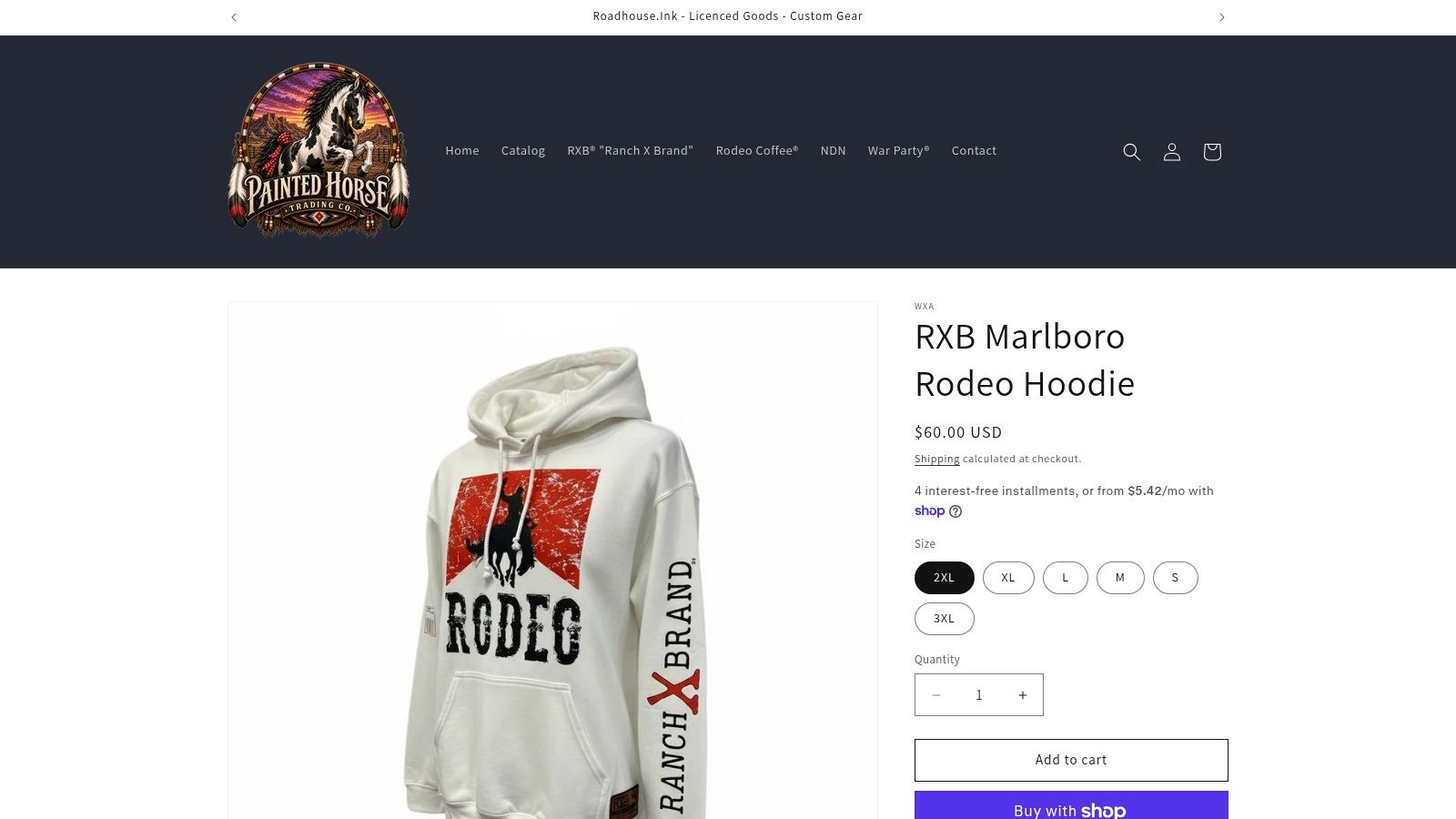
Those specifications describe a workable starting point, not an automatic approval. A cotton face can provide a suitable decoration surface, while the blend and fleece structure affect hand feel, recovery, and heat response. A generous fit may accommodate a substantial pouch, yet the pocket still defines where the garment can sit on the platen and where a DTF transfer can be pressed without crossing a raised seam or flexible opening.
Ask for evidence before approving a run
Request a physical sample or detailed construction images. Inspect the pocket attachment, edge finishing, and front-panel stability. Apply the intended artwork to one sample before production. An undecorated blank can look excellent, then show compression marks, distortion, or added stiffness after transfer application.
Check the complete garment after decoration:
Surface quality: Look for uneven pressure, ghosting, or texture transfer near the pouch.
Pocket function: Insert a hand and a typical carry item without stressing the printed area.
Seam behavior: Flex the pocket edges and inspect the transfer for lifting or distortion.
Fit balance: Confirm that the pouch does not pull the hem or make the logo appear low.
Production repeatability: Verify that the printer can load and press the garment consistently.
Wear X Apparel, LLC offers garment selection support, DTF printing, artwork intake, production, and quality checks for custom apparel, alongside an online merchandise shop. Its custom apparel services may suit projects that need the blank, pocket layout, and DTF production plan assessed together.
Your Hoodie Pocket Selection Checklist
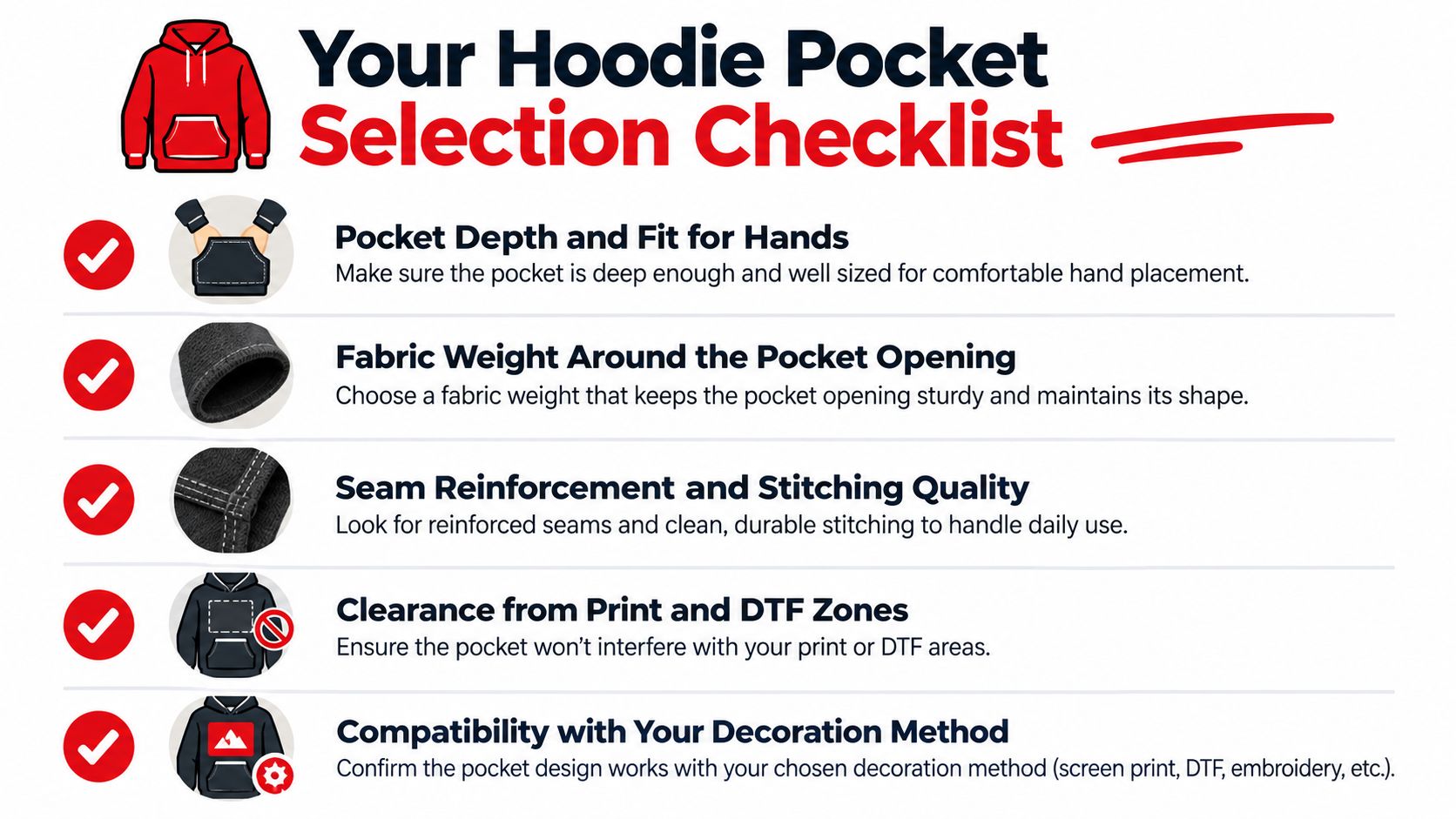
Use the checklist before you commit to a blank or approve artwork. It turns a broad product choice into a production decision tied to real use.
Confirm the pocket's job
Decide whether the wearer needs hand warmth, open storage, secure storage, or a combination. A kangaroo pouch suits comfort and warmth, while split, welt, side-seam, or hidden compartments may better serve travel, staff movement, or active work.
Test the physical opening
Put a hand inside the sample. Try the intended carry items. Check whether the opening feels natural and whether the pocket retains those items during ordinary movement.
Inspect the load-bearing details
Look at the pocket edges, topstitching, attachment seams, and reinforcement points. The pocket should remain flat when loaded, and the front panel shouldn't pull out of shape.
Map the decoration zones
Mark the pocket perimeter, openings, zippers, drawcords, and rib waistband on the artwork template. Keep critical DTF details on one stable panel whenever possible, and test any design that approaches a seam.
Wash before approving production
A decorated sample should be checked after laundering. Look for puckering, stretched openings, transfer lifting, and changes in drape. If the pocket fails after washing, changing the blank or artwork is more practical than explaining the defect to customers.
Match the blank to the audience
Work crews, event participants, travelers, teams, and streetwear customers won't use the same pocket in the same way. Select the construction, weight, fit, and storage layout around the person wearing the hoodie, not around the catalog image.
Hoodies with pockets deliver more value when the pocket, fabric, fit, and print are selected as one system. Before placing your order, send your artwork, audience, preferred use case, and blank requirements to Wear X Apparel, LLC for help with garment selection and DTF production planning. Their team can help you avoid pocket seams, choose a workable print zone, and move from concept to finished custom apparel with fewer production surprises.
Comments