


Ranch Wear Shirts: A Practical Buyer's Guide

You're standing in a feed store comparing two shirts for the same crew. One has pearl snaps, pointed yokes, and a dense cotton face. The other looks like a comfortable chambray button-up that would work fine at a weekend event. Both look Western. Only one may survive fence work, sweat, repeated laundering, and a custom logo without becoming a disappointment.
That decision gets harder when the shirt has to do two jobs. It must protect the wearer and move comfortably through a workday, but it also needs a clean surface for branding. This guide gives you one buying path for ranch wear shirts, from fabric and construction to sun exposure, daily use, and DTF printing.
Table of Contents
What Ranch Wear Shirts Actually Are Today - Separate working features from costume details
Where the Snap-Front Western Shirt Came From - Read the details by their job
Fabrics, Weights, and What Holds Up Outdoors - Match the weave to the chore - Build a seasonal system
Cotton, Blends, or Performance Synthetics - Use the job as the tie-breaker
Construction Details That Change Daily Comfort - Inspect the stress points
How DTF Printing Works on Ranch Shirts - Give the printer a useful brief
Choosing the Right Shirt for Your Operation - Run the selection in order
What Ranch Wear Shirts Actually Are Today
A ranch hand reaching through a truck bed, brushing past a gate, or climbing into a saddle needs a shirt that works before it looks Western. Ranch wear shirts are outdoor work garments built around movement, abrasion, weather, and livestock handling. Look for a durable weave, reinforced shoulder areas, useful pockets, and enough room to reach without pulling the hem loose.
Choose the shirt by its hardest assignment. A daily chore shirt must handle gates, tack, brush, tools, sweat, and repeated washing. For customer-facing events, a lighter shirt may make more sense if comfort, a clean appearance, and a workable print area matter more than maximum abrasion resistance. That choice sets the right starting point for custom branding.
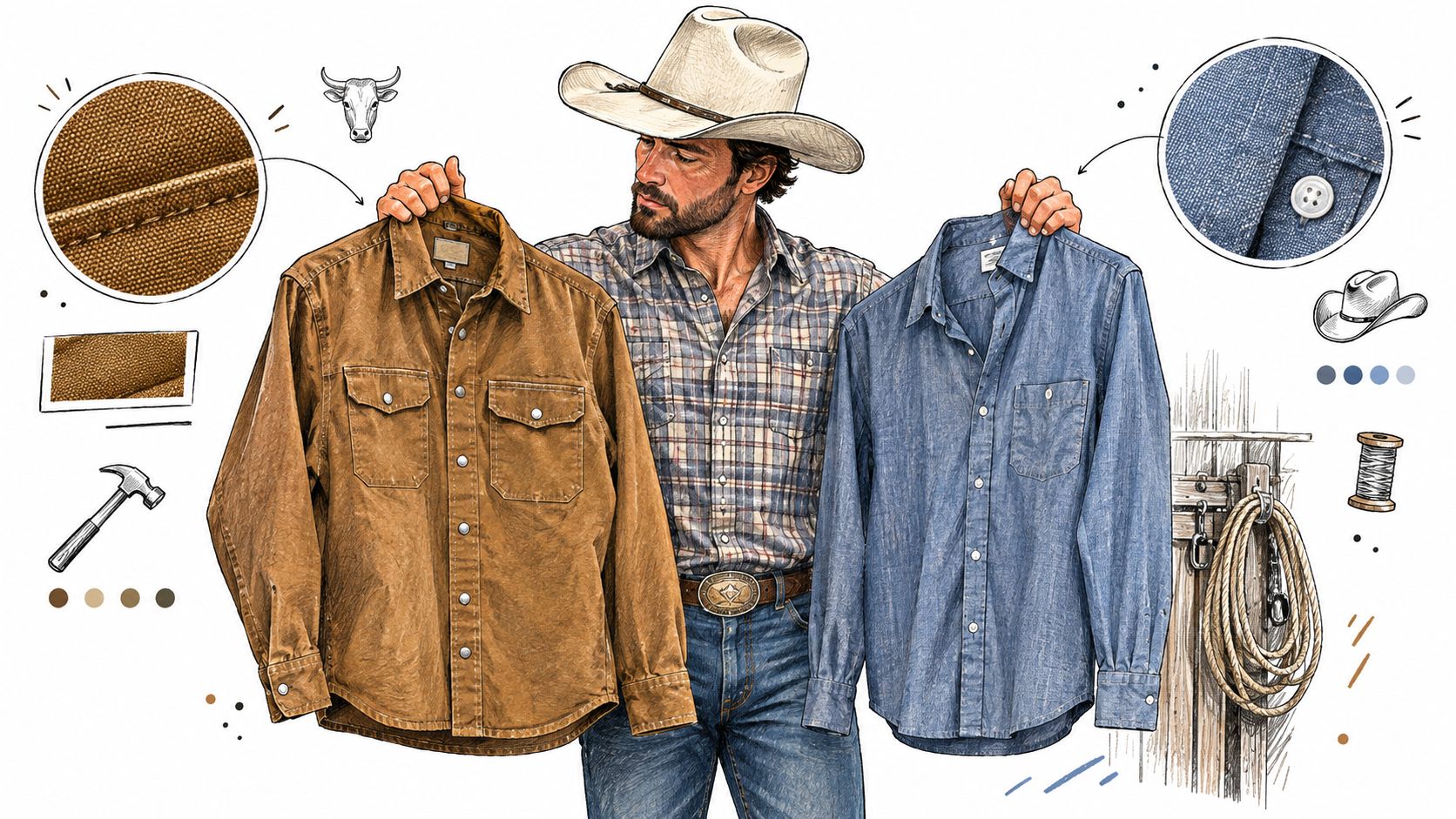
Separate working features from costume details
A pointed yoke may reinforce the shoulders, or it may exist mainly to signal Western identity. Snap closures offer quick release and simple handling. Pearl finishes add visual character, but they do little for durability. A shaped pocket earns its place when it closes securely and has reinforced corners. A shallow pocket with elaborate trim remains a style choice.
Custom orders make that distinction more important. A crew shirt with a printed logo must still perform after the novelty fades. Choose a smooth, stable fabric face for cleaner printing. Heavy texture, prominent embroidery, and a crowded pocket layout can limit placement or interrupt the design.
Practical rule: Buy the shirt for the hardest task it must perform, then choose print placement around the construction.
The category combines working heritage with broad commercial reach. Rockmount Ranch Wear traces a major modern milestone to 1946, when Jack A. Weil founded the company in Denver and helped popularize the snap-front Western shirt with front and back yokes, stylized pockets, and cuffs. Esquire's profile of Rockmount Ranch Wear describes the shirts' later move beyond working ranches into broader retail and international markets.
Evaluate ranch wear shirts as equipment first and branded apparel second. Match the fabric, fit, and construction to the operation, then treat printability as a finishing decision based on the available surface.
Where the Snap-Front Western Shirt Came From
A rider working around livestock, tack, fencing, or machinery needs a shirt that will not become a snag hazard. The snap-front design addresses that risk with a closure that releases quickly when pulled, making it a practical work feature rather than decoration.
The modern commercial milestone came in 1946, when Jack A. Weil founded Rockmount Ranch Wear in Denver. He is widely credited with inventing and popularizing the snap-front Western shirt in its recognizable form. The design combined details buyers still associate with ranch wear, including front and back yokes, shaped pockets, cuffs, and a fast-release front closure. Rockmount history profiles connect those details to the shirt's expansion from working ranches into wider fashion.
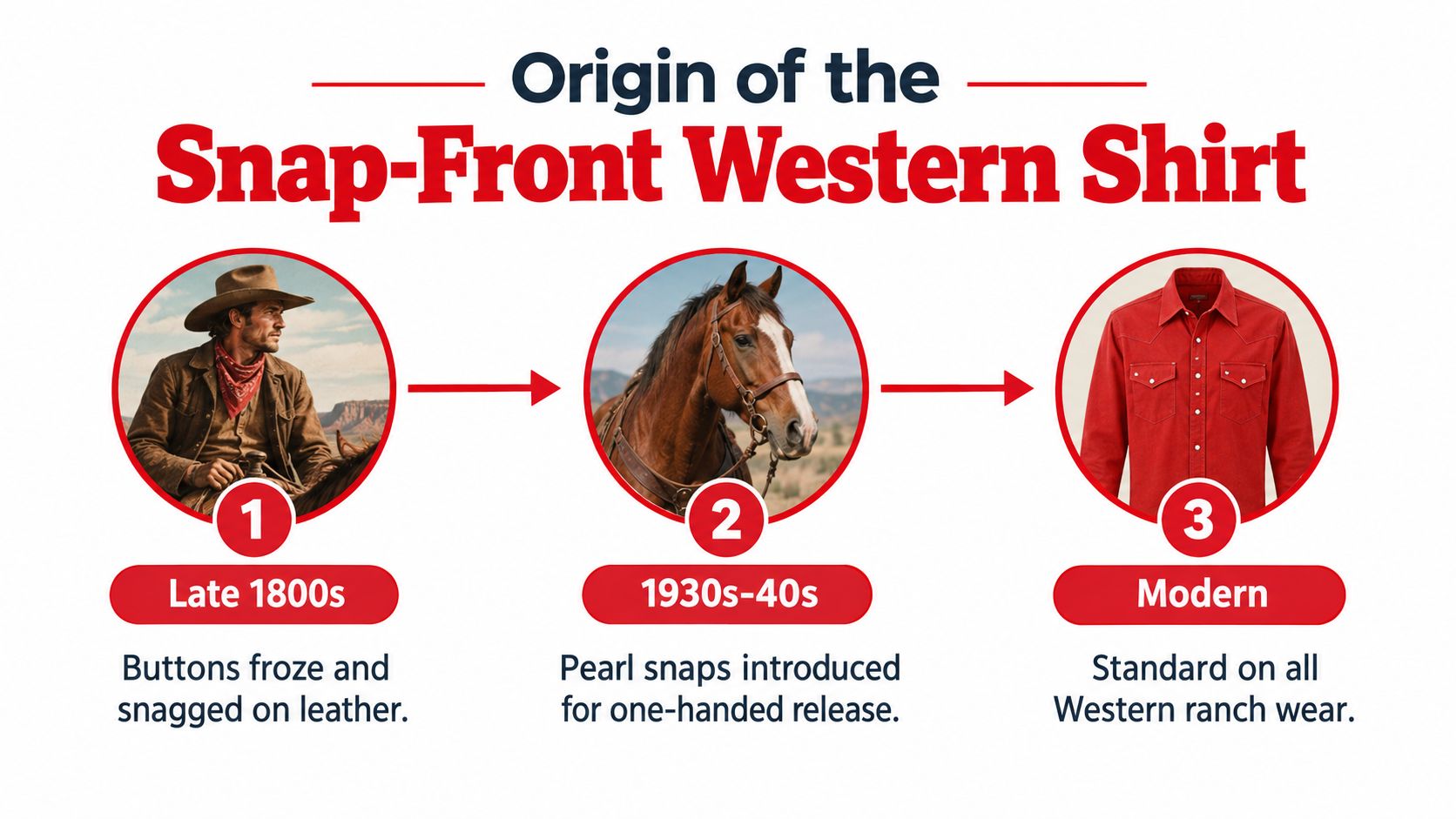
Read the details by their job
Start with the shoulders. A yoke adds structure where reaching, riding, and pulling put tension on the shirt. Its pointed shape can carry Western identity, but reinforcement determines whether the panel holds up during work.
Inspect the pockets next. They should lie flat, close securely, and have corners that resist separation after repeated use. The front placket needs to stay stable through frequent opening and closing. Cuffs should hold their shape without limiting wrist movement.
Snaps also affect custom production. They help a moving wearer, especially one working in gloves, but they reduce the usable print area. Keep a logo clear of the placket, and set up the heat press so it does not crush snaps or other hardware. Treat the shirt as both a working tool and a print canvas. Construction decides where branding can go.
The same Western design language appears in related ranch apparel. The RXB Marlboro Rodeo Hoodie is described as an 8.5 oz./yd² heavyweight hoodie made from a 70/30 ring-spun cotton/polyester blend with a 100% cotton face, fleece-lined hood, double-needle sewing, and a generous fit. It is not a ranch shirt, but it demonstrates the same buying rule: match construction details to the garment's actual use, then plan decoration around them.
Fabrics, Weights, and What Holds Up Outdoors
Fabric weight tells you how much material is packed into the shirt, but weight alone doesn't predict performance. A tight weave, strong seam construction, and the right fiber blend can make a lighter shirt more useful than a heavy fabric that traps heat or tears at stress points.
For rugged work, industry guidance commonly places practical work-shirt fabrics around 170 to 220 gsm, or roughly 6 oz. and up, because heavier cloth generally handles tearing and abrasion better. Workwear fabric selection guidance also emphasizes that tight weaves and ripstop-style structures can outperform a heavier plain weave when snags are common.
Match the weave to the chore
Chambray is a lighter choice for warm weather and lower-abrasion work. It breathes well and layers easily, but it isn't the fabric I'd choose for repeated brush contact or serious fence repair.
Denim and twill offer more protection. Their denser structures suit chores where the shirt rubs against rails, gates, vehicle seats, or equipment. Twill is especially useful when you want a durable work face without the stiffness of a very heavy canvas.
Canvas belongs in the hard-use category. It resists abrasion and feels protective, but it can become uncomfortable if the wearer spends a hot day doing high-exertion work. Use it as a cold-weather layer or for demanding outdoor conditions, not as the default shirt for every season.
Fabric | Weight Range | Best For |
|---|---|---|
Chambray | Light | Warm-weather chores, casual ranch wear, event shirts |
Cotton twill | Midweight to heavy | General ranch work, equipment handling, repeated wear |
Denim | Midweight to heavy | Abrasion-prone work, cooler weather, durable daily use |
Canvas | Heavy | Cold-season layering, brush, rugged exterior work |
Cotton-nylon or performance blend | Light to midweight | Heat, sweat, mobility, active outdoor work |
Build a seasonal system
Spring and fall call for a shirt that layers without becoming bulky. A midweight twill or denim shirt can sit over a base layer and under a vest or jacket. For summer, choose a lighter weave or a blend that dries faster. For winter, a heavier shirt works as an outer layer, provided the cut leaves room for insulation beneath it.
Fabric choice also affects moisture management. Heavy cotton twill and canvas tolerate friction, while cotton-nylon and polyester-spandex blends offer faster drying and better range of motion for active work. Pure cotton feels natural, but it can hold moisture and become heavy once soaked. Ranch apparel guidance from Atlantic Rancher makes that trade-off clear.
Don't choose a shirt just because the spec sheet lists a large fabric weight. Ask whether the weave resists snagging, whether the seams are reinforced, and whether the wearer can work comfortably in the local climate. A durable shirt that stays damp all day is still the wrong shirt.
Cotton, Blends, or Performance Synthetics
Fiber choice determines how the shirt feels at the start of the day and how it behaves after hours of sweat, dust, sunlight, and movement. There isn't one universal winner. There is a right choice for each role.
Pure cotton remains a strong option for comfort and decoration. It feels natural, breathes well, and generally accepts dye and print cleanly. Its weakness is moisture. Once cotton absorbs sweat or rain, it dries slowly and can feel heavy, especially in humid conditions.
Poly-cotton blends are the practical middle ground for many ranch crews. They usually wrinkle less, dry faster, and hold their shape better than pure cotton. Recent workwear guidance specifically highlights a 55% cotton and 45% polyester blend as more resistant to fading, shrinking, and pilling than pure cotton through repeated washing. This Western shirt review guidance supports the case for blends when laundry frequency matters.
Performance synthetics, including nylon or polyester blends with stretch fibers, make sense for hot, active work. They dry quickly, move easily, and can resist abrasion. Their drawbacks include potential odor retention, a less natural hand feel, and heat management problems in direct sun depending on the fabric and finish.
Fiber Type | Breathability | Drying Speed | Abrasion Resistance | Print Compatibility |
|---|---|---|---|---|
100% cotton | High in many weaves | Slow | Good when densely woven | Usually very good |
Cotton-polyester blend | Moderate to high | Moderate to fast | Good | Usually very good |
Cotton-nylon blend | Moderate | Fast | Very good | Requires testing |
Polyester-spandex or nylon-spandex | Varies by knit and finish | Fast | Good to very good | Requires careful testing |
Use the job as the tie-breaker
For cold-morning chores, a cotton-rich shirt or sturdy poly-cotton blend gives you comfort, structure, and dependable print behavior. For summer trail rides or outdoor branding events, a lighter blend or technical fabric may be the better choice because it manages sweat and movement more effectively.
Sun exposure deserves a separate decision. Long sleeves provide coverage, but they don't tell you how well the fabric manages heat or solar exposure. For long days outside, look for a shirt with a stated UV rating, with UPF 30+ identified as relevant guidance for reducing solar exposure. Independent Western shirt guidance also distinguishes fast-drying synthetics from cotton-nylon blends that balance comfort and durability.
For custom printing, start with cotton or cotton-rich fabric when the artwork needs strong color and fine detail. Use technical shirts when performance matters more, but require a test print before committing to a crew order.
Construction Details That Change Daily Comfort
A shirt can have the right fiber and still wear badly. Construction determines whether the garment pulls across your shoulders, rubs beneath a tool belt, or stays tucked while you bend over a feed bucket.
The back yoke is the first place to inspect. A pleated or double-yoke design gives the shoulders more room to reach, rope, or climb. A flat single yoke keeps the shirt lighter and cleaner, which suits lifestyle wear or low-intensity use. For a working crew, I prefer a shaped back with enough ease for movement over a slim cut that looks sharp only while standing still.
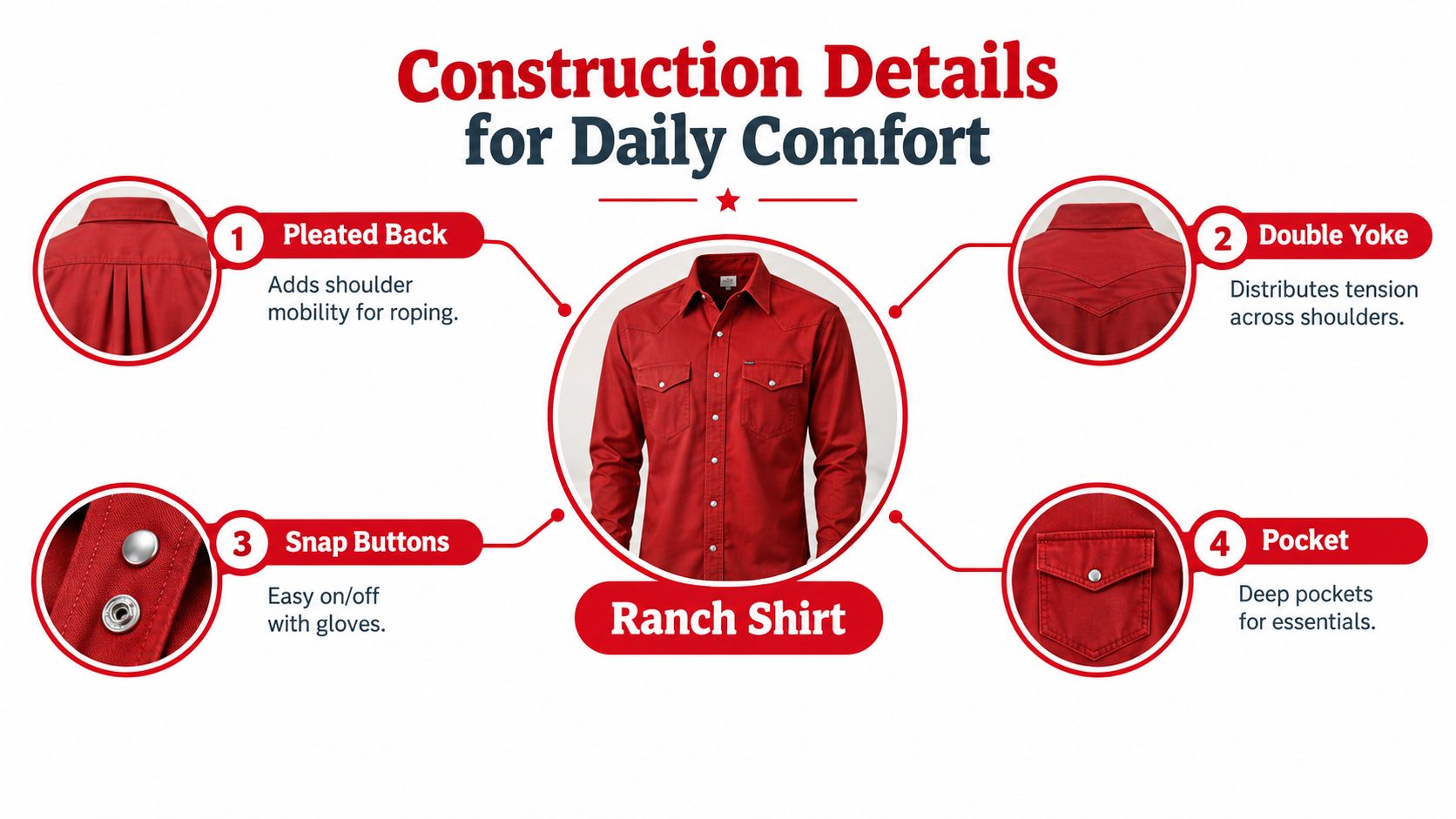
Inspect the stress points
Flat-felled seams are comfortable under chaps, packs, and tool belts because the enclosed seam lies flat against the body. Serged or overlocked seams can be perfectly serviceable, but a bulky finish may press into the skin during long wear.
Look for reinforcement where the shirt receives punishment:
Shoulders: Double yokes distribute tension and help stabilize the upper back.
Elbows: Patches add useful protection for crawling, leaning, or repeated contact.
Pockets: Bar-tacked corners and secure closures prevent early separation.
Plackets: Tacking at the top and bottom keeps the front from stretching.
Cuffs: Snaps are quick to operate, while buttons offer a more traditional adjustment.
The collar should stand without choking the neck, especially if the shirt will be worn under a vest or jacket. The hem also matters. A curved or extended shirttail stays tucked during bending and riding, while a shorter straight hem works better when the shirt is worn open over a tee.
A custom logo introduces another fit concern. Avoid placing a large print directly over a pleat, thick yoke seam, pocket flap, or snap line. Those features can interrupt the design and create uneven pressure during application.
A short visual guide can help teams identify the features worth checking before they order:
How DTF Printing Works on Ranch Shirts
DTF, or direct-to-film printing, creates artwork on a transfer film before adhesive powder is applied and the design is heat pressed onto the garment. The method can produce detailed, full-color graphics on cotton, poly-cotton, and selected performance fabrics, but the blank shirt still controls the result.
Combed cotton and poly-cotton usually provide the easiest starting point. They offer a stable surface, accept strong color, and are less likely to create problems during pressing. A high-stretch performance knit needs more caution. Heat, pressure, and stretch can affect the fabric surface, so the printer should test the exact garment instead of relying on a generic setting.
You can review an example of DTF artwork presentation through this DTF print visual, then ask how the artwork will be adapted to the chosen ranch shirt.
Give the printer a useful brief
A reliable custom order starts before the artwork reaches the press. Send clean vector artwork when possible, identify the intended brand colors, and explain whether the result must match a specific Pantone reference or thread color. Printed ink and embroidery thread won't always match visually, so approve the actual production method rather than assuming the colors will translate automatically.
Request a strike-off on the exact blank shirt. A test on a smooth cotton tee doesn't prove that the same design will sit correctly on a dense twill shirt, a textured canvas shirt, or a performance knit.
Placement should be decided with the garment's construction in mind:
Left chest: Keep the design clear of pockets, seams, and snap plackets.
Full back: Confirm that a back yoke or pleat won't interrupt the artwork.
Sleeve: Check sleeve width, seam placement, and how the design reads while the arm moves.
Pocket area: Use caution, since flaps and pocket openings can make alignment difficult.
The printer should also confirm the care label and washing instructions before production. A shirt that looks excellent on delivery still needs to survive the way the crew launders it.
Production rule: Never approve a large custom run from a digital mockup alone. Approve the print on the exact shirt, in the exact color, with the exact placement.
Choosing the Right Shirt for Your Operation
Start with the role. A full-time ranch crew needs a different shirt from a weekend rider, a western event team, or a brand selling merchandise online. Write down the hardest use before you compare colors or decoration.
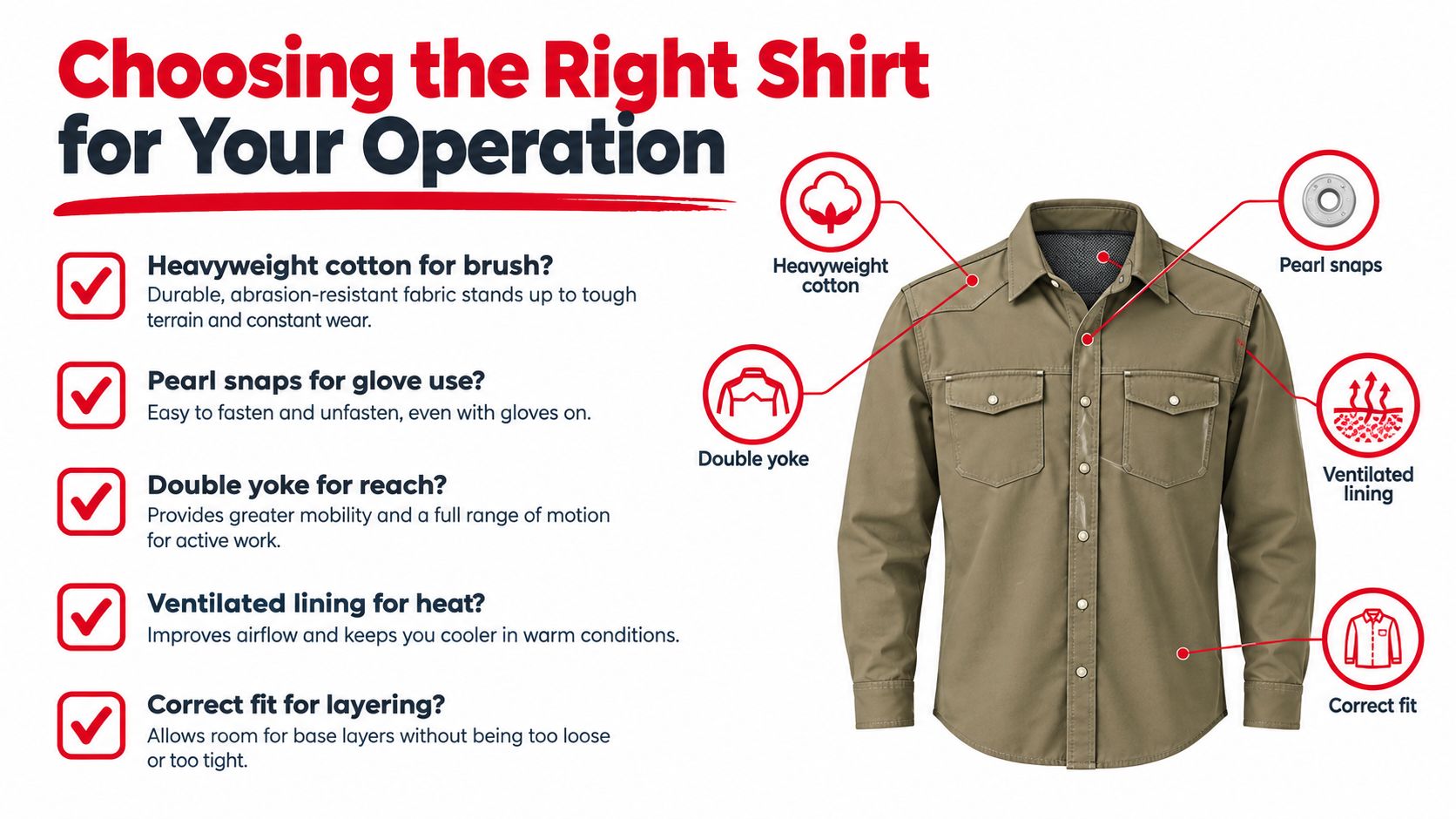
Run the selection in order
Define the primary use. Choose full-time labor, occasional ranch work, events, resale, or lifestyle wear. If one shirt must serve several roles, prioritize the most demanding one.
Match the climate and workload. Choose a lighter breathable fabric for hot, active conditions and a denser twill, denim, or canvas option for abrasion and colder layering. If sun exposure dominates the day, look for a stated UV rating rather than assuming every long-sleeve shirt performs the same way.
Check movement and fit. Have the team try the shirt with the layers, gloves, belts, and equipment they use in the field. A double yoke and pleated back can help reach, while a generous hem can keep the shirt tucked during chores.
Plan the branding area. Decide whether the logo belongs on the chest, back, sleeve, or yoke. Keep the artwork away from snaps, pockets, pleats, and heavy seams.
Test DTF compatibility. Confirm the fabric content, surface texture, heat tolerance, artwork format, color expectations, and strike-off process with the printer.
Confirm the order details. Ask about minimum order quantity, lead time, size availability, care-label compatibility, and what happens if the approved blank changes before production.
The best shortlist usually contains fewer garments than buyers expect. Select one shirt for hard work, one for lighter or customer-facing use, and a hybrid only if the team genuinely needs it. Too many options create inconsistent branding and make replacement orders harder.
Bringing Work, Style, and Custom Branding Together
The strongest buying decision treats the ranch shirt as both a working tool and a print surface. For a working ranch, my default is a midweight cotton or cotton-rich snap-front with reinforced yokes, a stable face, and enough room for movement. That combination gives the wearer practical structure while giving DTF artwork a predictable surface.
For lifestyle customers and event teams, choose a lighter cotton or soft blend with a cleaner cut and an unobstructed chest or full-front print area. It won't need the same level of reinforcement as a daily work shirt, and a lighter garment can be more comfortable when people are standing, traveling, or socializing rather than handling livestock.
A hybrid crew shirt should split the difference. Pick a durable midweight fabric, confirm that the shoulders allow reaching, and use a restrained logo placement that works on the ranch and in front of customers. The shirt can carry Western identity through its yoke, snaps, and pocket design without depending on excessive decoration.
Wear X Apparel's branded apparel resource can be considered alongside the garment selection and DTF planning process when a ranch, team, or outdoor business needs custom apparel.
The final recommendation is straightforward. Choose the fabric for the work, choose the construction for movement, and choose the print placement for the garment you bought. When those three decisions align, one ranch wear shirt can represent the operation, perform in the field, and still look right at an event.
Wear X Apparel, LLC helps customers select garments, prepare artwork, and produce custom apparel with DTF printing for crews, events, teams, and small businesses. Visit Wear X Apparel, LLC to discuss a ranch-ready shirt, confirm print suitability, and move from garment choice to finished branded apparel.
Comments