


Shipping & Returns Policy for Wear X Apparel

You've found the right hoodie, uploaded the artwork, and picked a delivery date that matters. The last thing you want is to discover after checkout that a custom print can't be returned, a shipping charge wasn't clear, or a damaged package requires a long email chain to resolve.
A useful shipping & returns policy should remove those surprises before production starts. Custom DTF apparel follows a different path from ready-to-buy merchandise, so the rules need to explain what happens at each stage, who is responsible for each decision, and how Wear X Apparel handles genuine production or delivery problems.
Table of Contents
The Custom DTF Production Journey - Artwork and garment preparation - Film layout and print application - Inspection and packing
How to File a Claim or Request a Replacement - Start with the order record - Photograph the problem clearly - Send the claim through the correct channel
Using Account Access and Email Updates - Use the account as your record - Keep operational emails available
Final Checklist Before You Order - Garment selection - Size chart review - Artwork check - Price and production review - Delivery check
How This Policy Protects Your Order
Custom apparel involves more than placing an item in a cart. Your order may require garment selection, artwork preparation, print production, quality inspection, packaging, and shipment. Each step uses materials and staff time, which is why a clear policy protects both the customer and the production team.
The policy gives you practical information before you commit:
Order type: Know whether you're buying a ready-to-buy product or requesting a made-to-order project.
Production responsibility: Understand which details must be approved before printing, including garment style, size, color, artwork, and placement.
Return eligibility: See why a personalized item may not qualify for a preference-based return, while a damaged, incorrect, or misprinted item can require a replacement review.
Shipping expectations: Confirm the delivery method and provide an address where the package can be received safely.
Returns are a significant operating issue across online retail. Retailers expected 15.8% of annual U.S. sales to be returned in 2025, representing $849.9 billion in merchandise, according to the National Retail Federation and Happy Returns figures summarized by Ringly. The same source identifies processing operations and carrier shipping as leading reasons retailers charge for some returns.
That context explains why flat, visible pricing and direct instructions matter. The policy isn't designed to make the process difficult. It's designed to ensure that customers know what they're approving, while the shop can reserve production-based remedies for genuine fulfillment problems.
Shipping and Returns for Different Order Types
The buying path determines what happens after payment.
Ready-to-buy items come from the online shop's existing merchandise catalog. You choose the listed product, review the available details, complete checkout, and receive fulfillment updates through the normal store process. The main decisions are product selection, size, shipping address, and delivery method. If you're buying one hoodie for personal use or a finished product for an outdoor lifestyle collection, this is the simpler route.
Custom orders begin with a project conversation or consultation. You may need help selecting a blank garment, matching colors, checking sizes, preparing artwork, or planning quantities for a business, event, club, team, or organization. Production starts only after the relevant details are settled, because a custom item can't be treated like a generic warehouse product once it has been printed for your project.
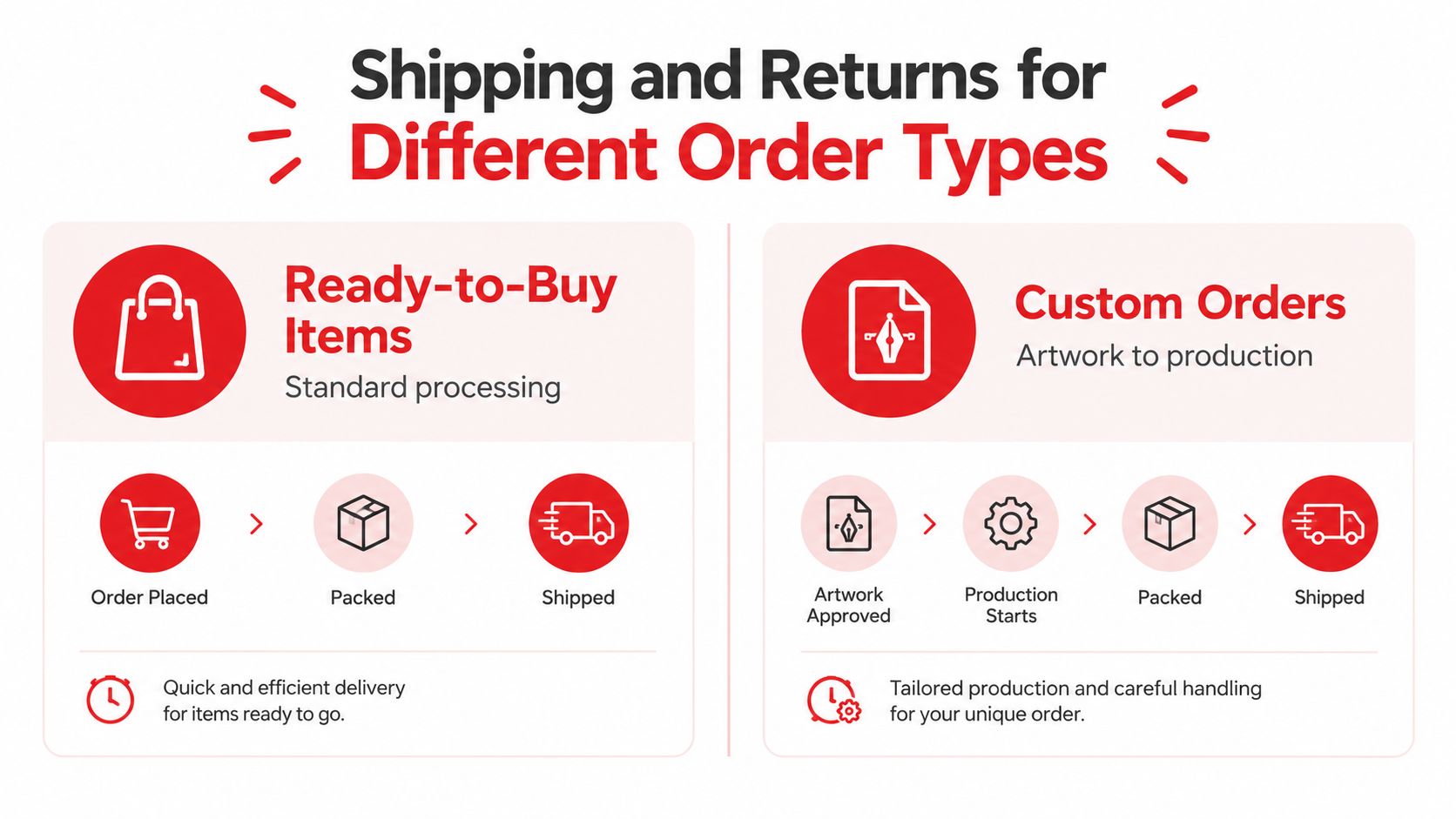
Order path | What you control before fulfillment | What to verify |
|---|---|---|
Ready-to-buy merchandise | Product, size, address, and shipping choice | Listing details and delivery information |
Custom project | Garment, artwork, print placement, quantities, and approval details | Final specifications before production |
A standard return window is often used for e-commerce, but Shopify's guidance on clear return policies emphasizes that visibility and understandable conditions matter more than using one universal duration. Put the applicable rules where customers can review them before checkout, not only after a problem occurs.
For garment selection and project details, review the custom apparel selection resource before production begins. It's much easier to correct a garment or sizing decision before printing than after the finished pieces have been pressed and packed.
The Custom DTF Production Journey
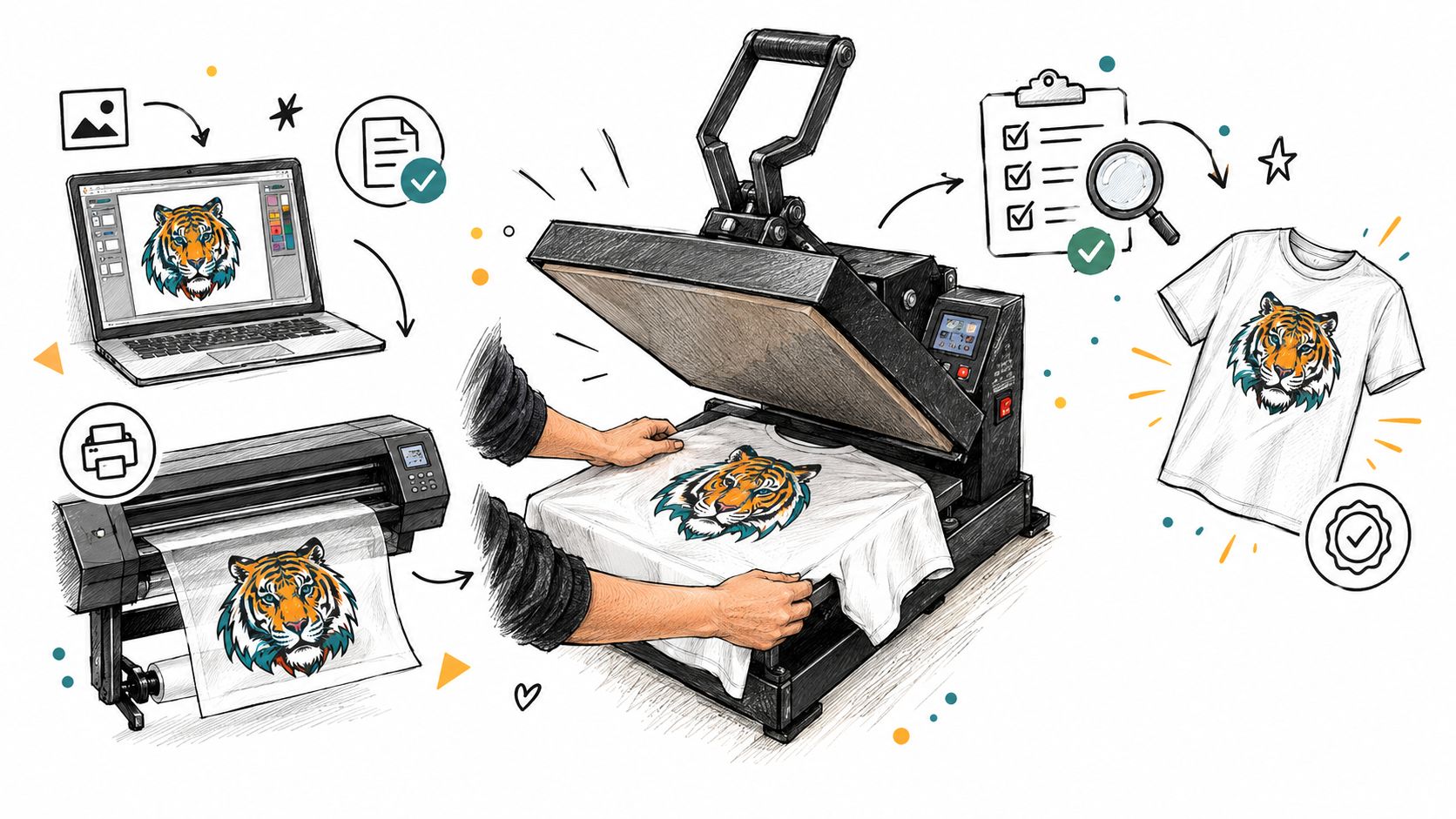
A custom DTF order starts with the information that determines the finished result. Send the artwork, explain the intended use, and identify the garments, sizes, colors, and quantities you need. If the design has small text, fine detail, or multiple print locations, raise those points during the artwork stage rather than waiting for the completed order.
Artwork and garment preparation
The team first checks whether the selected garment suits the project and whether the supplied design is ready for DTF production. Garment selection matters because fabric composition, color, fit, and surface area affect how the print will be applied and how the finished piece will look.
For a batch order, the production plan also needs a size and quantity breakdown. A team order with several sizes should be recorded clearly so the packing stage can match each finished garment to the approved list. A single missing size can disrupt an event or workwear delivery even when the printed pieces themselves are correct.
Film layout and print application
DTF production uses transfer film, artwork preparation, powder and curing steps, and a heat press. Designs are arranged efficiently on 22.5-inch-wide film, allowing the production team to use the available print area responsibly while preparing multiple pieces or print locations.
The design is then applied to the selected garment under controlled production conditions. The exact workflow can vary with the garment and design, but the important customer decision happens before this point. Check the artwork, placement, garment, and sizing while changes are still practical.
For a concrete garment example, the RXB Marlboro Rodeo Hoodie is described as a heavy-weight hoodie with a three-dimensional velvety chest logo, a generous fit, a fleece-lined hood, and a 70/30 ring-spun cotton and polyester blend with a 100% cotton face.
Watch the production process here to see how artwork, equipment, and heat application fit together:
Inspection and packing
Before shipment, the finished garments should be checked against the approved order. The useful checks are straightforward: correct garment, correct size, correct artwork, acceptable placement, and complete quantity. Packaging then protects the pieces during transit and gives the customer a clear point of reference if a shipping issue needs to be reported.
You can also review the DTF production reference when you're deciding whether a particular design is ready to submit.
When Custom Items Are Non-Returnable
A custom garment is printed for a specific customer, design, quantity, and garment choice. If you change your mind about the artwork after approval, select the wrong size, or decide that the color isn't what you wanted, the item may not be resalable in its printed form. That's the practical reason personalized goods are commonly excluded from ordinary preference-based returns.
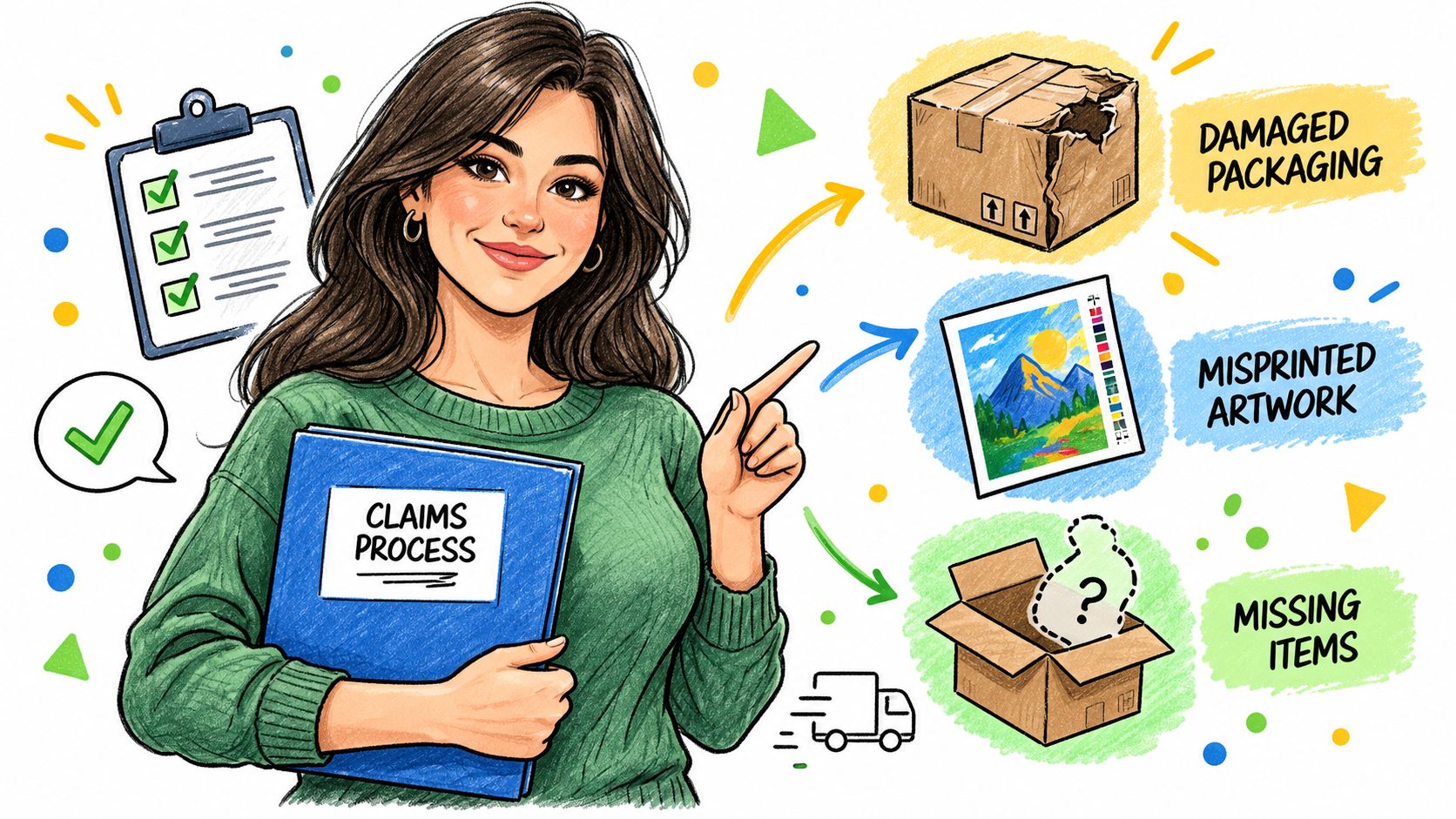
The exception is a fulfillment problem. A misprint, incorrect garment, missing item, or damage in transit should be reviewed as a claim rather than treated as a normal change-of-mind return. The distinction keeps the process fair: customers have a route to a remedy when the production result doesn't match the approved order, while the shop doesn't absorb the full cost of a mistake that occurred after customer approval.
Scenario | Return status | Notes |
|---|---|---|
You selected the wrong size before production | Review before production | Contact the team immediately. Changes may be possible before the order enters production. |
You changed your mind about an approved design | Generally not eligible as a preference return | The garment was prepared specifically for the approved project. |
The printed artwork is materially incorrect | Claim or replacement review | Provide order details and clear photos of the result. |
The wrong garment or quantity was shipped | Claim or replacement review | Keep the packing materials and document what arrived. |
The package arrived visibly damaged | Claim review | Photograph the outer package and the affected contents before disposal. |
A ready-to-buy item has a qualifying issue | Follow the applicable store process | Use the order record and current policy instructions. |
Cost transparency matters because return economics are often hidden from shoppers. In a 2025 mystery-shopping study, 74% of brands refunded only the item cost, excluded original shipping, and required customers to pay return postage, as reported in the Stord mystery-shopping study. A clear policy should state those responsibilities before checkout.
For production materials and garment suitability, review the custom print information before approving a custom run. The best time to resolve uncertainty is before the film is printed and the garments are pressed.
How to File a Claim or Request a Replacement
A good claim gives the production team enough evidence to compare what you received with what was approved. Don't send only “my order is wrong” if you can provide photographs, the order reference, and a short description of the discrepancy. Complete information reduces back-and-forth and helps the team identify whether the problem occurred during production, packing, or transit.
Start with the order record
Use the account or confirmation email to locate the order details. Record the order number, the product or custom project name, the quantity affected, and the delivery address. If the problem concerns one garment in a larger batch, identify its size and position in the shipment rather than reporting only that the entire order is affected.
Photograph the problem clearly
Take wide and close photographs. For damaged packaging, photograph the shipping carton or mailer from multiple sides before discarding it. For a print problem, include one image showing the whole garment and another showing the artwork, placement, color, or surface issue in detail.
Include the following information:
Order reference: Use the number shown in your confirmation or account.
Problem description: State what you expected and what you received.
Affected quantity: Say whether the issue concerns one piece or the full shipment.
Photographs: Attach clear images of the item and packaging where relevant.
Preferred resolution: Explain whether you're requesting a replacement or another available remedy.
Send the claim through the correct channel
Submit the information through the support or contact route identified in the current Shipping & Returns resources. Keep the original packaging and affected garments until the team tells you what to do. Sending an item back without instructions can create unnecessary cost and delay, especially when the issue may be resolved through photographs and order verification.
Practical rule: Document first, alter nothing, and wait for return or replacement instructions.
If the carrier shows a delivery problem, include the tracking information from your shipment update. If an item is missing from a multi-piece order, compare the packing contents with your approved quantity list before submitting the claim.
Using Account Access and Email Updates
Order visibility starts with the customer details entered at checkout. Use an email address you monitor and make sure the shipping address is complete before submitting the order. A typo in an apartment, business, or rural delivery address can create a problem that production staff can't correct after dispatch.
After checkout, keep the confirmation email. It gives you a record of the order details and provides a reference if you need support. For custom projects, retain the artwork approval or project correspondence as well. That record helps both sides confirm the version of the design and the specifications that entered production.
Use the account as your record
Customer account access can help you find order history and review available status information without starting a new support request. Check the account before contacting the team about a basic order question. If the information doesn't answer the issue, include the order reference in your message so support can work from the correct record.
Keep operational emails available
Email updates may contain order confirmations, fulfillment changes, shipping information, production notes, and communications about available offers. Add the sending address to your safe-sender list if messages are repeatedly filtered, and check the spam or promotions folder when an expected update doesn't appear.
Good practice: Use one monitored email address for the order, the account, and any custom project correspondence.
For a custom run, status visibility is especially useful because the project moves from approval to production and then fulfillment. Updates don't replace your responsibility to check the artwork and garment details, but they make it easier to spot an address issue or timing concern before the package is already in transit.
Quick Reference for Support and Contact
Shipping questions usually fall into one of three categories: before ordering, during production, or after delivery. Use the policy and FAQ resources for routine questions, then contact the team with the order reference when your situation requires a review.
Before placing a custom order, ask about garment selection, artwork suitability, quantities, and the shipping method that fits your event or business schedule. A consultation is the right place to resolve uncertainty about the product itself. It's not efficient to wait until after production to ask whether a different garment would have been more suitable.
During fulfillment, contact support if your order details appear incorrect, your address needs attention, or a custom project has an unresolved approval point. Keep the message focused. Include the order number, the specific question, and any relevant artwork or quantity information.
After delivery, use the claims process for damage, missing pieces, an incorrect garment, or a print that doesn't match the approved work. Photographs and packaging details help the team assess the issue without guessing.
Wear X Apparel maintains listed contact locations in Santa Ana, California, and Black Hawk, South Dakota. Use the current phone numbers and mailing addresses shown in the official support resources rather than relying on an old saved contact. The site also provides an FAQ, Terms & Conditions, Shipping & Returns information, and an Ask the expert path for guidance.
Delivery expectations vary by customer and destination. Nearly two-thirds of U.S. consumers expect two-to-three-day shipping as standard, according to the 2025 FedEx convenience and digital trends report. That expectation makes it important to confirm the actual shipping option and production requirements for your order instead of assuming that a fast carrier service eliminates production time.
Final Checklist Before You Order
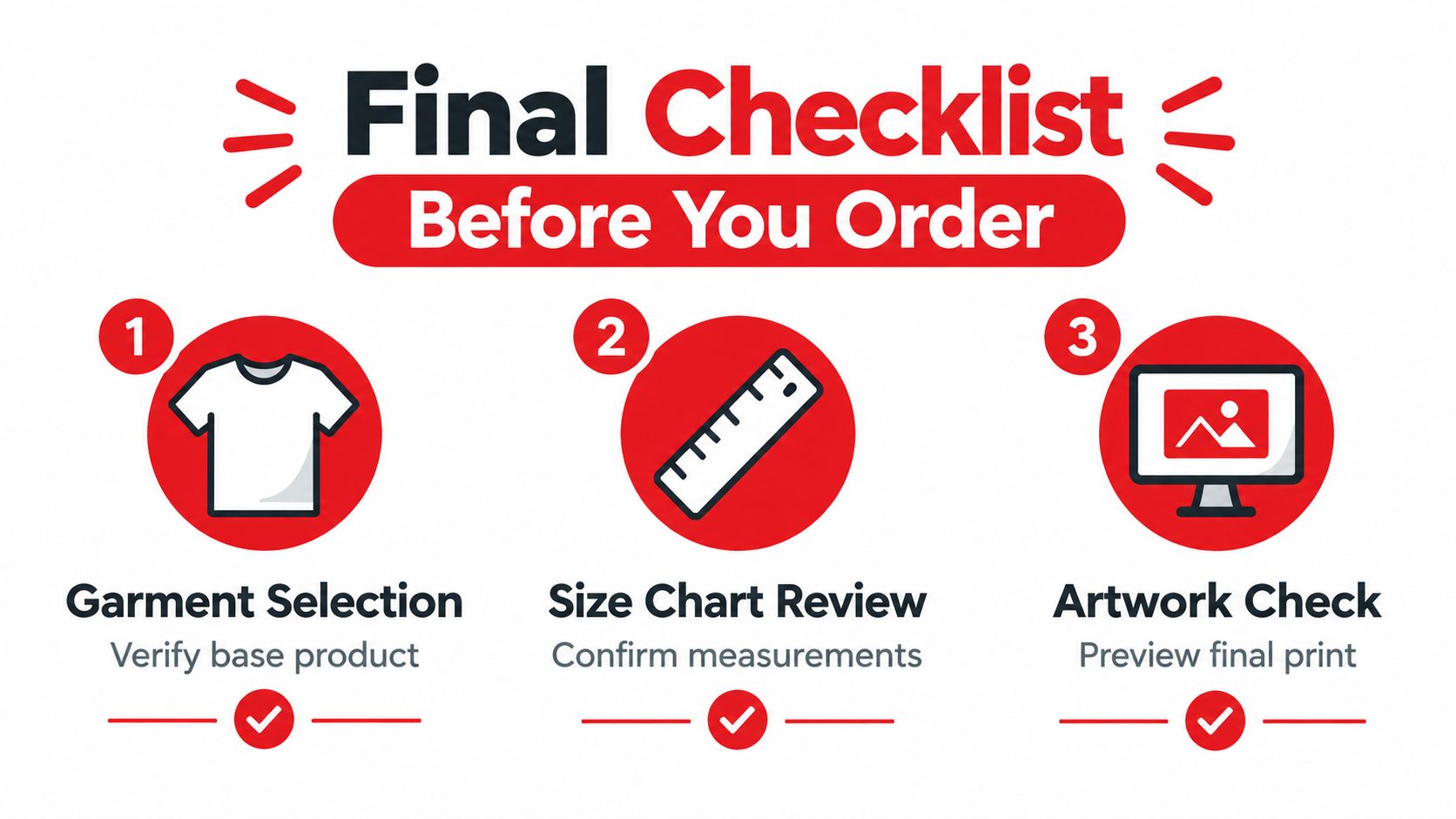
A few minutes of checking can prevent the most expensive custom-order mistakes. Review the information on screen, compare it with your project notes, and ask questions before approval if anything is unclear.
Garment selection
Confirm the base product, color, fabric, fit, and intended use. A workwear order, event shirt, team hoodie, and personal garment may need different choices. If you're ordering for several people, prepare a size and quantity list that someone else can check before submission.
Size chart review
Measure against the applicable size information rather than relying only on the label you usually wear. For a generous-fit garment, account for the intended silhouette. Once a custom item has been produced, a sizing preference is different from a manufacturing defect, so this check deserves attention before approval.
Artwork check
Open the final artwork and verify the spelling, colors, dimensions, placement, and print locations. Check that the file you approved is the file being used. If the design contains a logo, phone number, website address, or event date, read it character by character.
Price and production review
Confirm the garment charge, DTF printing charge, quantities, and any applicable shipping cost before payment. Flat-rate printing and material costs should be visible, not inferred from an informal estimate. If you're ordering a batch, make sure the total reflects every garment and print location.
Delivery check
Choose a shipping method that matches the schedule, including production time before carrier transit. Enter the delivery address carefully and use an address where someone can receive the parcel. Save the confirmation email and watch for status updates after checkout.
Before approving production, make sure the garment, size, artwork, quantity, address, and shipping choice all match the order you intend to receive.
Wear X Apparel, LLC provides ready-to-buy merchandise, custom garment selection, and DTF production for individual pieces, branded workwear, teams, events, and organizations. Visit Wear X Apparel, LLC to review the available ordering paths and start a project with clear garment, production, shipping, and returns expectations.
Comments