


Unisex Hoodie Sizing Guide and Fit Chart

The most popular advice about unisex hoodie sizing is also the least reliable: choose your usual letter size, then trust the chart. That approach fails because a size label describes an intended fit, while your body and the garment each have several measurements. A hoodie can fit your chest yet feel tight across the shoulders, look too boxy at the waist, or finish awkwardly high or low at the hem.
The better method is to match body measurements to garment measurements, then adjust for ease, layering, fabric weight, and the shape you want. The chart below gives you a starting point, the measuring method shows you how to verify it, and the body-shape guidance helps predict where a unisex cut may work well or compromise. If you're ordering for a team or custom run, the later workflow turns those decisions into a practical sampling process.
Table of Contents
How Unisex Sizing Actually Works - Ease is the missing number
Unisex Hoodie Size Chart With Measurements - Three ways to use the table
How to Measure Yourself and Your Hoodie - Measure your body - Measure a hoodie you trust
Gender-Neutral Fit and Your Body Shape - Broad shoulders - Longer torso - Fuller chest - Slimmer waist
Inches to Centimeters and International Size Labels - Don't translate labels blindly
Sizing for Custom and Team Hoodie Orders - Build the specification first - Sample before committing
Why Unisex Hoodie Sizing Trips Everyone Up
A size chart can be correct and still give you the wrong buying decision. Chest width and body length rarely show whether broad shoulders will feel cramped, whether sleeves will reach your wrists, or whether sizing up creates useful layering room or just a longer torso.
That is why shoppers compare several sizes, measure a favorite hoodie, and remain unsure. Independent fit research found that 65% of respondents considered size charts inaccurate, while 15% found them too confusing to use (fit research on shopper sentiment and size charts). The failure may come from the chart itself, but it can also come from different garment blocks, cuts, and measuring conventions between brands.
Practical rule: Use the letter as a starting label. Use garment measurements and intended ease to make the decision.
Start with the garment's chest and length. Then compare those measurements with a hoodie you already like. That comparison works like a fitting-room reference: it shows how the numbers behave on a real body, not just where you fall on a letter scale. After that, choose whether you want a closer fit, relaxed shape, or room for another layer.
Use this sequence:
Start with the body: Check chest, torso, and shoulder measurements to identify a likely range.
Verify the garment: Compare pit-to-pit width, body length, and sleeve length with your reference hoodie.
Predict the compromise: Decide whether sizing up gives your shoulders or layers enough room while adding unwanted length.
Match the use case: Workwear, everyday fleece, and custom team orders can require different amounts of ease.
This approach predicts where a unisex hoodie may feel tight, boxy, or long before you order. It also gives you a repeatable basis for comparing brands and deciding whether a custom adjustment is worth requesting.
How Unisex Sizing Actually Works
Unisex sizing isn't merely a men's chart with a neutral name. Manufacturers generally begin with intended body dimensions, then add garment ease for movement, layering, and the desired silhouette. ISO 8559-2:2017 frames clothing sizing around body measurements rather than finished-garment measurements and describes a primary and secondary dimension system for communicating fit more consistently.
In plain language, the size label is a fit designation, not a precise measurement of the hoodie laid flat. A label such as M points toward a target wearer range. The finished garment must then be larger than the body so you can move your arms, wear a base layer, and avoid tension at the chest.
Ease is the missing number
Ease is the space between your body and the garment. If your chest measures a certain amount and the hoodie provides more room around the chest, that difference is what permits movement and creates the visual line of the garment. A closer cut uses less ease. A relaxed or boxy cut uses more.
Unisex hoodies often use a balanced, relatively straight silhouette rather than shaping strongly through the waist. That makes ease especially important. Two hoodies can fit the same chest measurement but look very different if one adds room through the body and the other narrows toward the hem.
The same letter can also represent different finished measurements from one retailer to another because brands choose different blocks, fabrics, and intended fits. A generous hoodie may feel right at your usual label, while a smaller-cut style may require a size change. Always read the garment chart as a specification for that particular style, not as a universal translation of the letter.
Unisex Hoodie Size Chart With Measurements
A size chart can identify a starting point, but it cannot predict fit on every body. Use the table below as a working reference for an adult unisex progression, then check chest room, body length, shoulder construction, and your layering plan. Those details show whether a hoodie will feel tight, boxy, or long.
Chest width means the flat pit-to-pit measurement. Body circumference is the approximate doubled chest-width equivalent, not a measurement of your body. Sleeve length appears in the technical reference, although some charts publish it separately.
Size | Chest Width (in) | Body Length (in) | Sleeve Length (in) | Body Circumference (in) |
|---|---|---|---|---|
XS | 19–20 | 25–27 | Check brand spec | 32–34 |
S | 21–22 | 26–28 | Check brand spec | 36–38 |
M | 23–24 | 27–29 | Check brand spec | 40–42 |
L | 25–26 | 28–30 | Check brand spec | 44–46 |
XL | 26–28 | 29–31 | Check brand spec | 46–50 |
2XL | 27–29 | 31–32 | Check brand spec | 50–53 |
The reference progression follows neutral hoodie measurement guidance. Sleeve specifications vary with the pattern and measurement method, so confirm that dimension with the retailer before ordering. The hoodie measurement reference image can also help you read the measurements consistently.
Three ways to use the table
Match your body chest. Measure around the fullest part of your chest, keeping the tape level and snug without pulling it tight. Select the row that leaves enough room for the fit you want. Your body circumference should not equal the garment circumference. The difference is ease, the space that allows movement and layering.
Compare a hoodie you already like. Lay it flat and measure across the chest. A pit-to-pit measurement close to one row gives you a more useful starting point than your usual letter size. Check its length too. That comparison reveals whether you prefer a cropped, standard, or extended body.
Inspect the grade between sizes. A common production progression adds roughly 2 inches of flat chest width from one size to the next, though the exact grade belongs to the specific manufacturer. On a boxy silhouette, a small increase can add noticeable room at the sides and make the next size look much wider.
A favorite hoodie measuring about 23 inches pit to pit and reaching your preferred length points first to the M row. If another hoodie with the same size label measures 25 inches across, it may wear closer to an L regardless of its tag.
Broad shoulders make chest width only part of the decision. Between L and XL, compare body length and shoulder construction. XL may provide the shoulder room you need while adding too much length. In that case, sizing up will not fully correct the proportions, and another garment block may suit you better.
The RXB Marlboro Rodeo Hoodie illustrates why construction matters. Its generous fit, fleece-lined hood, and 8.5 oz./yd² US 70/30 ring-spun cotton/polyester three-end fleece with a 100% cotton face affect how it wears. Judge a substantial hoodie by its actual measurements and intended layers, not its label alone.
How to Measure Yourself and Your Hoodie
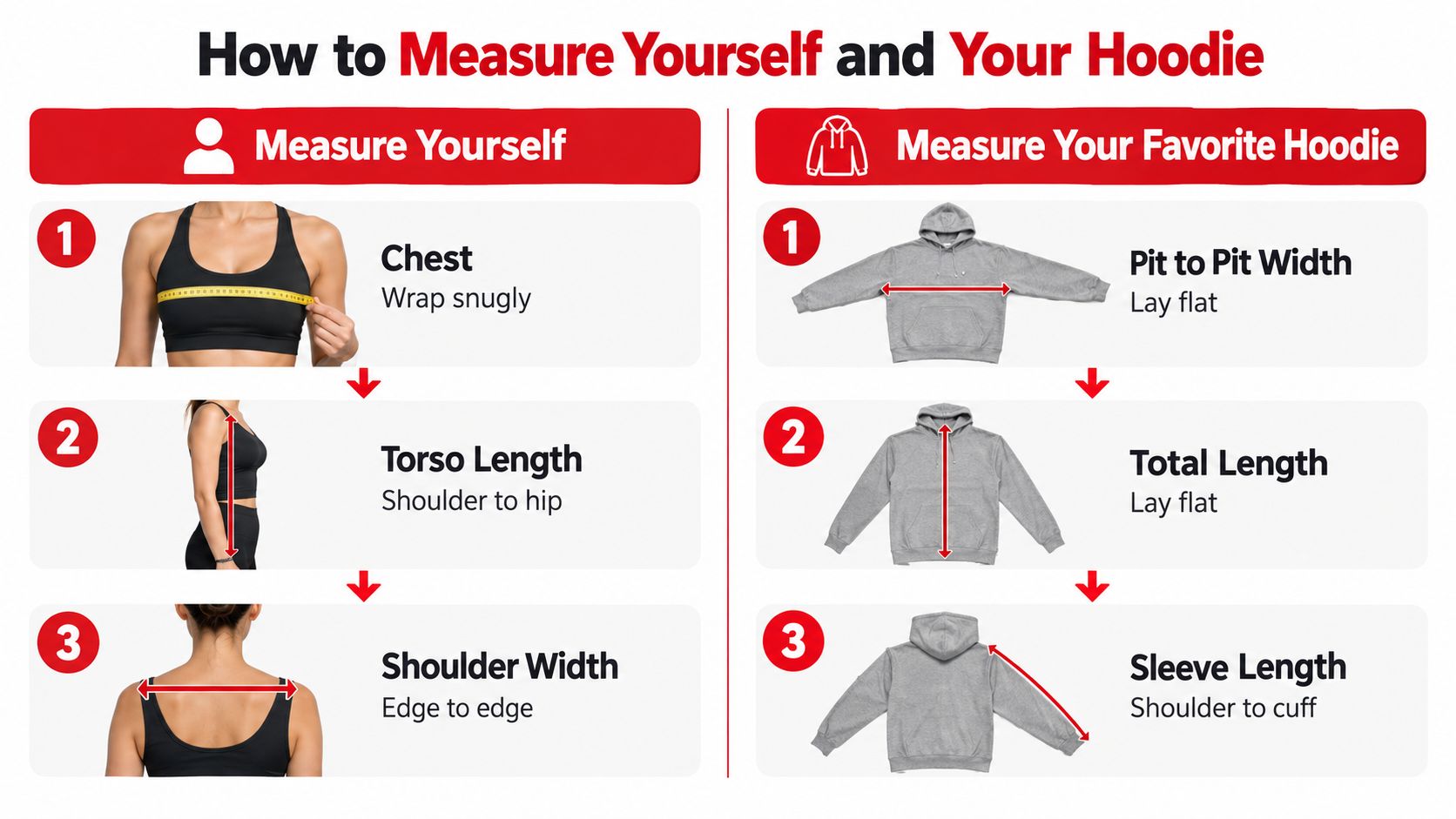
You need two sets of information. Body measurements tell you what must fit. A favorite hoodie tells you how much ease and length you personally prefer.
Measure your body
Chest: Stand naturally and wrap the tape around the fullest part of your chest. Keep it level, breathe normally, and hold it snugly without compressing your body.
Torso length: Measure from the point where you want the shoulder or neckline area to begin down to the hem position you prefer. A consistent reference is more useful than pulling the tape along a curved body.
Shoulders: Measure from the outer edge of one shoulder to the other, following the natural shoulder line. Avoid measuring across the front of the chest, which produces a different number.
Don't measure over a bulky coat. Thick clothing inflates the chest result and can push you toward a garment that's unnecessarily wide. Have someone help with shoulder and length measurements if possible, because twisting to read the tape changes your posture.
Measure a hoodie you trust
Lay the hoodie flat on a table and smooth it without stretching.
Chest width: Measure straight across from one underarm to the other.
Body length: Measure from the highest shoulder point near the collar down to the hem.
Sleeve length: Follow the sleeve from the shoulder seam to the cuff. If the garment has a dropped shoulder, record the measurement method because it won't compare perfectly with a set-in sleeve.
A favorite hoodie can reveal your preferred ease more accurately than your body alone. If your chest measurement suggests one row but your existing hoodie is noticeably wider, you may prefer a relaxed fit. If its length is shorter than the chart row you're considering, sizing up may create unwanted sleeve and hem length rather than the drape you want.
Use the same method for the new garment's chart. Don't compare a flat chest width from one brand with a full circumference from another without converting the measurement.
The video below offers another visual walkthrough of the process.
Gender-Neutral Fit and Your Body Shape
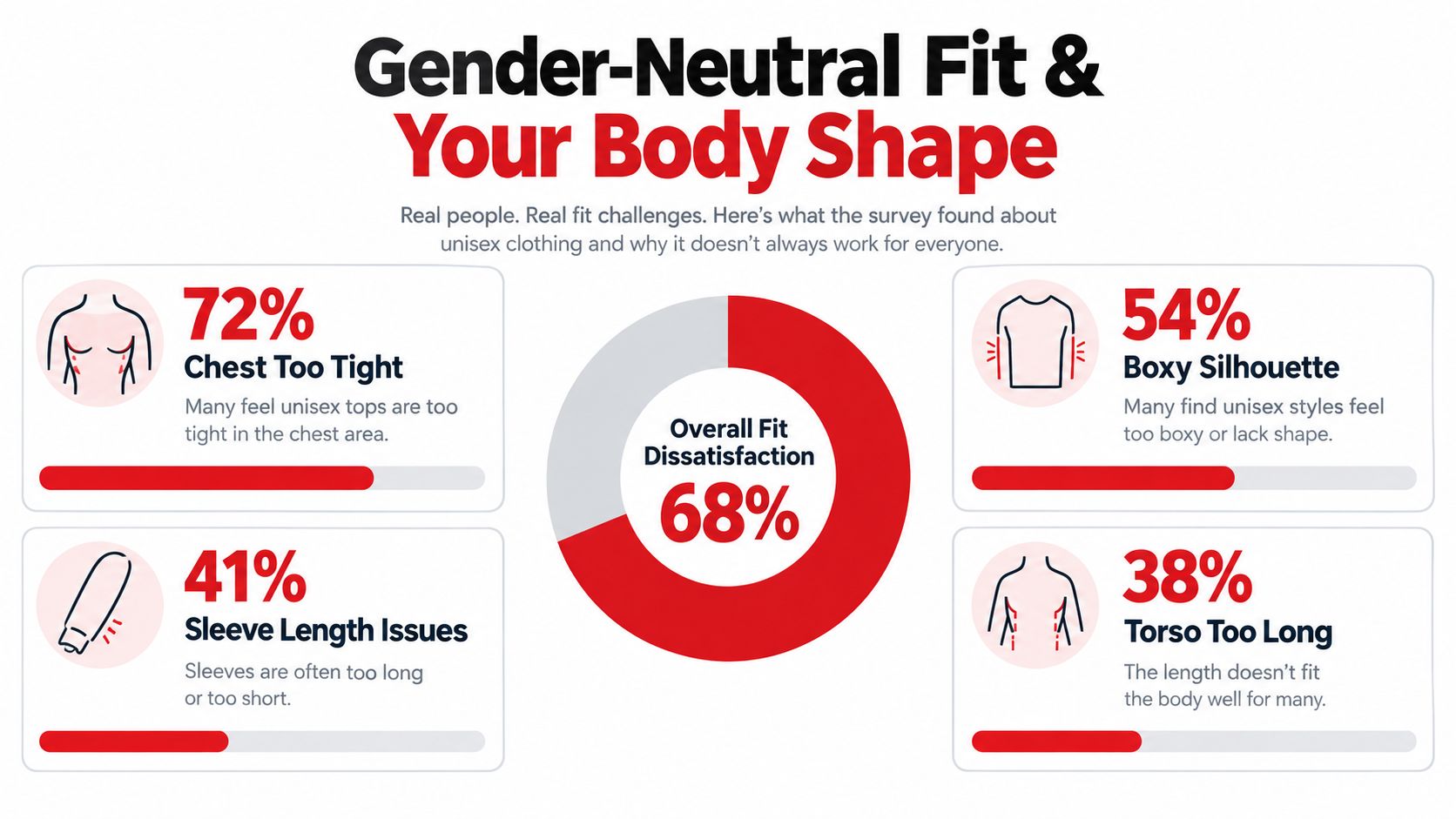
A unisex size chart can look precise while hiding the actual pressure points. One shared block simplifies production, yet it may fit a broad shoulder, fuller chest, longer torso, or slimmer waist very differently. In a university survey of 236 young adults, men's reported dissatisfaction included overall fit at 50.0%, chest circumference at 38.9%, shoulder width at 37.0%, and length at 37.0% (university survey of unisex clothing fit).
The practical lesson is simple: fit is not one number. Fabric can pull across the chest, drag at the shoulders, hang away from the waist, shorten coverage, or extend past the hips. Use your body measurements to identify the likely problem area, then compare ease, layering needs, and the garment's construction before choosing a size or requesting a custom change.
For a visual example of how a shared silhouette can sit differently on different bodies, review this illustration of cowboy and cowgirl proportions.
Broad shoulders
A broad-shouldered wearer may have enough chest room yet feel tension through the armholes or upper back. Going up a size usually adds space there, but it also increases body width and length. A dropped shoulder, generous armhole, or published shoulder measurement may solve the problem more cleanly.
A larger size can work for a deliberately loose silhouette. It cannot create a close, structured shoulder fit if the block is too straight. Check whether longer sleeves and a lower hem are acceptable before sizing up.
Longer torso
A hoodie can fit across the chest and still finish higher than you prefer. The next size may add coverage, but it also adds width, which can make the body look oversized.
Compare body length first. A longer garment block is generally a better match than automatically moving up. For a custom order, request added body length separately if the supplier offers that adjustment.
Fuller chest
A fuller chest needs front and underarm room without turning the entire hoodie into a wide rectangle. A close body measurement can cause the front to pull, while the pouch pocket or graphic may distort. Sizing up can relieve that tension but leave excess fabric around the waist.
A relaxed cut often works well when the fabric has enough structure to hang rather than cling. Compare chest ease with shoulder construction, then decide whether extra body volume is a reasonable trade-off for movement and coverage.
Slimmer waist
A slimmer waist can expose the reverse issue. The chest and shoulders fit, while the lower body falls straight and appears boxy. That shape is common in gender-neutral blocks.
Keep the size that supports your upper body if you want the intended relaxed silhouette. Size down only if a trimmer waist matters more than unrestricted room through the chest, shoulders, and arms.
Inches to Centimeters and International Size Labels
Convert every measurement before comparing hoodie charts. The relationship is 1 inch equals 2.54 centimeters, so use:
centimeters = inches × 2.54
To convert back:
inches = centimeters ÷ 2.54
For example, a flat chest width of 23 inches equals 58.42 centimeters, while a body length of 29 inches equals 73.66 centimeters. Complete the calculation before rounding. Early rounding can make two nearby sizes appear identical and hide a meaningful fit difference.
Measurement | Inches | Approximate centimeters |
|---|---|---|
Flat chest width | 19 in | 48.26 cm |
Flat chest width | 23 in | 58.42 cm |
Flat chest width | 27 in | 68.58 cm |
Body length | 27 in | 68.58 cm |
Body length | 29 in | 73.66 cm |
Body length | 32 in | 81.28 cm |
Don't translate labels blindly
US, UK, and EU retailers may all use labels from XS through 2XL, yet those labels do not guarantee matching garment measurements. Treat the label as an index, not a fit decision. The brand's chest, body length, and sleeve specifications should determine your comparison.
International size-label confusion is reasonable because regional charts can use familiar labels for different blocks. Research on shopper sentiment has also found concern about size and image mismatches, including overseas labeling (research on shopper sentiment and size charts). Compare each measurement line by line instead of relying on a regional conversion table.
A US chart showing a 23-inch flat chest and an overseas chart showing 58 centimeters describes nearly the same width after conversion. If the labels differ but the measurements align, trust the measurements. If the labels match but the measurements do not, trust the garment specifications and review the return terms before ordering. For a custom hoodie, record the converted measurements in one unit so the production team is working from a single, clear specification.
Sizing Up for Layered Wear
Layering changes the required ease, but it doesn't automatically justify moving up. A T-shirt adds little bulk, so your measured size will often provide a clean relaxed fit. A long-sleeve base layer adds more, while a flannel or thick knit can make the same hoodie feel restrictive across the chest and arms.
Use this decision rule:
T-shirt underneath: Start with the size that matches your body and favorite-hoodie measurements.
Long-sleeve base layer: Stay at that size if the garment already has generous ease and the shoulders feel comfortable.
Flannel or substantial layer: Consider the next size when chest, arm, or shoulder movement feels constrained.
Thick sweatshirt underneath: Size up only after checking length and sleeve measurements. Extra width isn't useful if the hem and cuffs become excessive.
Fabric weight changes the experience. A heavy fleece with a fleece-lined hood occupies more space and can feel warmer and less flexible than a lighter knit, even if the published chest measurement is similar. The RXB Marlboro Rodeo specification, for example, identifies a heavy-weight fleece and generous fit, so sizing up may be unnecessary for everyday wear and could create too much volume.
Layering test: Decide what you'll wear underneath, then compare the new garment with a hoodie that has been tested over that same layer.
For workwear or outdoor use, prioritize arm mobility and shoulder room. For everyday wear over a T-shirt, prioritize the hem and sleeve position, because an oversized step can make the hoodie look untidy even when it feels comfortable.
Sizing for Custom and Team Hoodie Orders
A group order should never begin with “send us everyone's usual size.” That approach turns a label assumption into a production quantity, and correcting the mistake after printing may be difficult or impossible.
Start with a sample-based workflow.
Build the specification first
Request the exact garment chart and confirm:
Chest grading: Check the flat pit-to-pit measurement and the change between adjacent sizes.
Length grading: Confirm how the hem changes as sizes increase.
Sleeve measurement: Ask where the sleeve starts, especially for dropped-shoulder patterns.
Fit description: Record whether the cut is fitted, regular, oversized, or generous.
Fabric behavior: Note fleece weight, fiber blend, and care instructions that may affect feel and dimensions.
Use the measuring method above to create a simple form for each participant. Ask for body chest, preferred hoodie chest width, preferred length, and intended base layer. Include a clear instruction to measure a hoodie they already like, because that captures personal ease better than a letter size.
Sample before committing
Order or inspect one representative garment in each likely size range before finalizing the batch. Have participants try the samples over the clothing they expect to wear, then record where the hoodie feels tight, broad, short, or long.
This step catches problems that a spreadsheet cannot. A team may discover that one style works for broad shoulders but runs long on shorter torsos, or that a heavy fabric needs more room than a lightweight sample suggested. It also gives the group a chance to choose whether consistency means everyone wears the same labeled size system or whether the garment selection itself needs to change.
For custom production, Wear X Apparel, LLC offers garment selection and DTF printing services for custom apparel and merchandise. A consultation path is useful when the garment, decoration method, and sizing decision need to be confirmed together.
Quick-Reference Sizing Cheat Sheet
Use this checklist before ordering. It connects body measurements with ease, layering, garment comparison, and custom-order decisions.
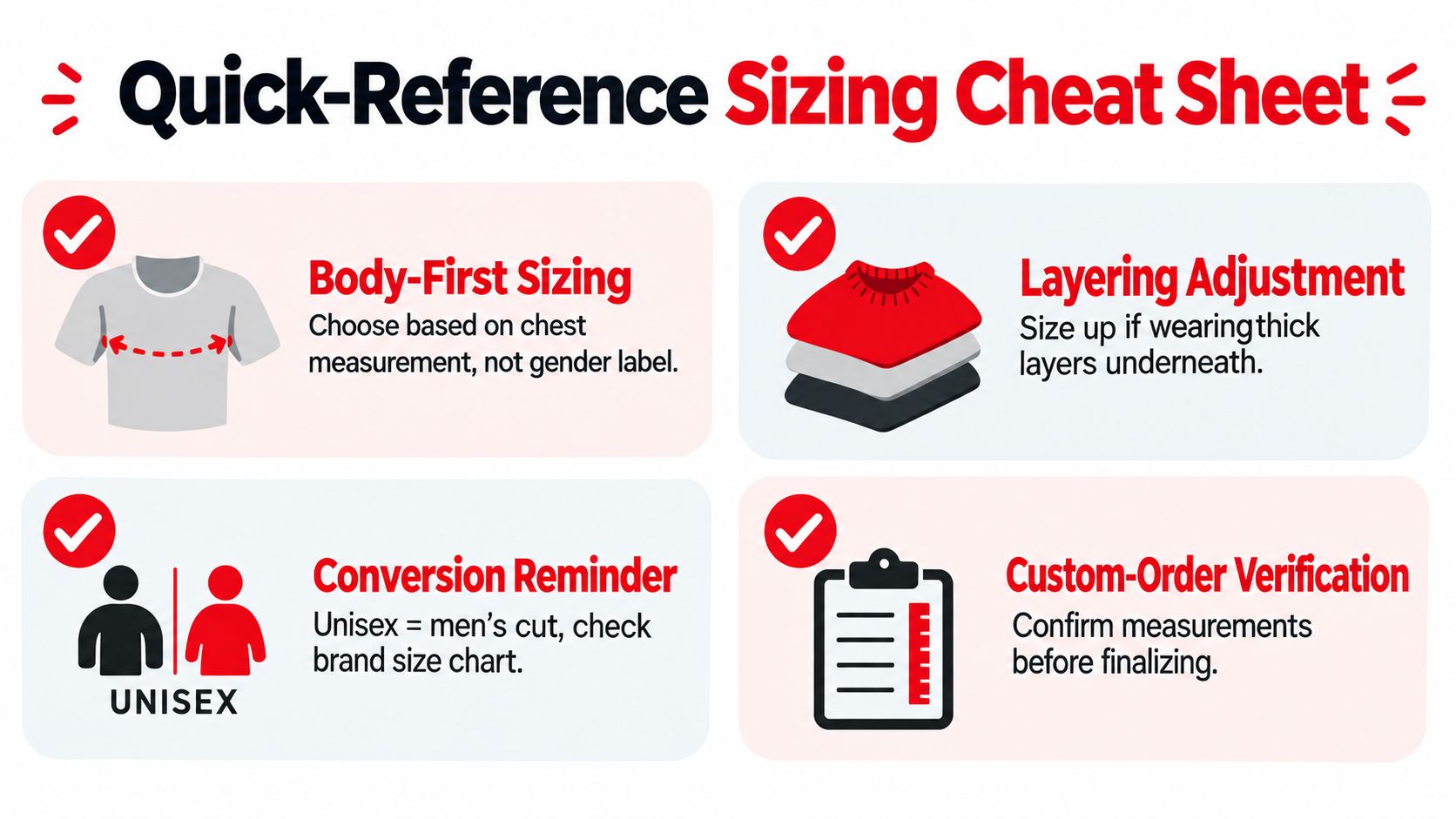
Start with your body: Measure chest, shoulder width, and torso length. Chest suggests a starting size, while shoulders and length predict whether the hoodie will feel tight, boxy, or long.
Compare a garment: Lay a hoodie you already like flat. Measure pit-to-pit, body length, and sleeves, then compare those dimensions with the retailer's chart. This often captures your preferred ease better than a letter size.
Choose ease intentionally: Decide whether you want a close, relaxed, or layered fit. A larger label may add width and length together, even when you only need more chest room.
Predict the compromise: Broad shoulders can require extra width and produce excess length. A longer torso may need a longer block instead of a larger size. A fuller chest may need room without a wide waist.
Convert carefully: Multiply inches by 2.54 to get centimeters. Compare measurements directly rather than relying on regional labels.
Check fabric and layers: Heavy fleece, a lined hood, and thick base layers reduce usable room. Judge comfort with the clothing you expect to wear.
Verify custom orders: Sample likely sizes, collect participant measurements, check graded dimensions, and approve the final size distribution before decoration.
As earlier research indicates, shoppers often question size charts and compare multiple sizes (independent research on size-chart confidence). Treat the chart as evidence, not a guarantee. Combine it with your body shape, favorite hoodie, intended layers, and preferred silhouette.
Wear X Apparel, LLC helps customers select garments and produce custom hoodies and merchandise with Direct-to-Film printing. Visit Wear X Apparel, LLC before production to discuss garment selection and the project.
Comments